P.S. I have yet to code the auto-scroller that would bring you from the 'clicked on' in paragraph citiation to the corresponding number in the "Citations and Sources" portion of this artile. However the numbers still line up and the links in that portion of the page do indeed work.
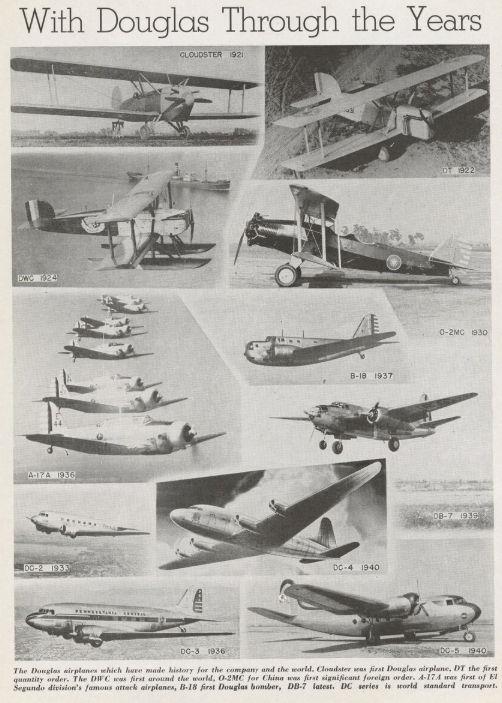
The story of this company starts with Donald Douglas in July 1921 as he leaves his former institution, Davis-Douglas, in order to start his own company under his own rule: Douglas Aircraft Company.[1]
What started out as a few men in a barn making aircraft quickly became a new enterprising corporation when on April first, 1921, the United States Navy put out a specification requiring a new bi-plane bomber be fit for carrier, seaplane, and land base duties, with minor modifications to make each mission type work.
Douglas entered with their DT (or Douglas Torpedo) and won the contract, thus cementing their ties to the Navy. [2]
The DT was incredibly successful and served with the Navy for eight years; however that's not what put Douglas on the board globally. In 1924 from April 6th to September 28th four army aviators set out to fly in modified DT's in order to set the first ever circumnavigation of the world by aircraft.
A feat accomplished by two of the four aviators and a new record christened at 371 hours and 11 minutes, however flown over the course of 175 days. [3]
This achievement would also show up in the Douglas logo as several aircraft flying around a globe. This logo theme would remain even as the company was bought out by other corporations.
With a new found record the DT got several new contracts from within the United States and outside of it, serving Norway and Peru.
The DT continued to serve and Douglas continued to produce new airframes to match the growing needs of the US services, however the majority of the enterprises cash came from somewhere else.
In 1931 a TWA (TWA is an airliner) Ford trimotor crashed killing all members aboard including famed Notre Dame Coach Knute Rockne. [4]
The cause of this accident was due to water seeping into the structural members of one wing, dissolving the glue holding the laminate together.
The Aeronautics Branch of the U.S. Department of Commerce placed the strictest requirements on all existing airliners essentially banning wood as a structural material for all aircraft.
Boeing was the first to respond to the new orders but as Boeing only served United Airlines,[5] TWA couldn't purchase Boeing's new plane.
So they turned to their competition and begged Douglas to make something to match.
DC-1/2/3
The Douglas DC-1 first flew on July 1st, 1933 and for six months conducted considerable testing.
It easily out flew any competition (the Fokker trimotor and the Ford trimotor). Over 250 flying hours and 15,000 gallons of fuel were put through the airplane in tests on all matters; conventional things like speed, stability and general performance, but more critically on sound proofing advancements, vibration dampening, new avionics, instrumentation, and propellers. [6]
This first prototype cost $325,000 and would go on to be the basis for the DC-2 [7], which was the aircraft that TWA accepted for service in 1934.
192 DC-2's were made at the Douglas Santa Monica Factory, while Fokker had license to build them, none were built in Europe.
Instead all European examples of the DC-2 were built then ferried to their airlines. Five DC-2's were licensed in Japan by the Nakajima Aircraft Company. [8]
Twenty nations operated the DC-2 at a civilian level and eleven nations operated the DC-2 in the military.
The DC-3 succeeded the DC-2 and first flew on December 17th, 1935; it differed greatly in gross maximum load thanks to advancements in wing technology and uprated engines.
Again, the DC-3 was a massive success in the civilian market however the reason this aircraft is famous is not for its overnight flight sleeping bays, or for how economical it was; rather the DC-3 is merely the civilian name for the famed C-47.
There were only 607 original DC-3's flying in the world by the time World War Two had started, all of which were converted into military transports.
An additional ten thousand C-47's [9] were made during the war.
A-17
But let's not get ahead of ourselves.
The year is still 1934 in this time line and there's a new project blooming with Jack Northrup.
Northrup was always an instrumental part in the Douglas influence sphere; he designed and built the fuel systems on the cloudster and DT before running off to assemble his own plant.
Jack Northrup always envisioned things slightly differently and made his own corporation in El Segundo, California where he designed and produced several mail carriers and smaller airliners.
In 1935 he first flew the new A-17, a single engined light attack platform and in 1936 the aircraft was in production.
In February of 1937 Douglas purchased fifty-one percent of all Northrup Corporation stock and began dissolving the company and bringing it into the fold.[10]
Thus Douglas now has two factories, Santa Monica being the original Douglas factory and now El Segundo with the purchase of Northrup.
Jack Northrup would go on to make another aircraft company under his name separate from other corporations but that's a story for another time.
B-18 Bolo and B-23 Dragon
The DC-3 wasn't the only plane to come out of the DC-1 and 2.
As many have theorized before, "What if we took an existing transport plane, cargo or otherwise, and turned it into a bomber?"
In 1934 the U.S. Army requested a new bomber to replace the older Martin B-10, this new aircraft was to have twice the bomb load and range as the B-10.
Martin entered in a slightly upgraded version of its B-10 but it was never seriously considered as it never met the requirement, Boeing entered the Model 299 and while this was the clear and decisive winner in the competition its was also never considered as it was a four engine machine when the specification clearly asked for a twin engine bomber.
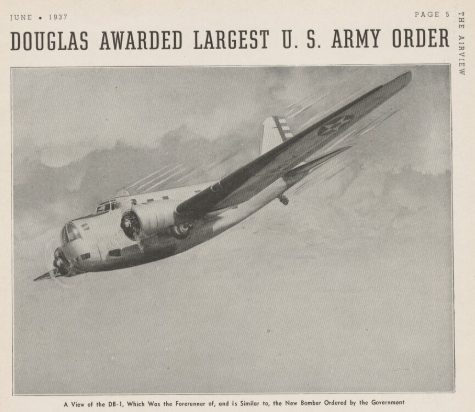
So Douglas was left with the DB-1 [11], an aircraft that perfectly met every aspect of this requirement.
The DB-1 was based off of a DC-2 but had a few major differences; its wing was extended slightly and moved upwards to make room for a bomb bay, the fuselage was narrowed and extended for slightly better aerodynamics. 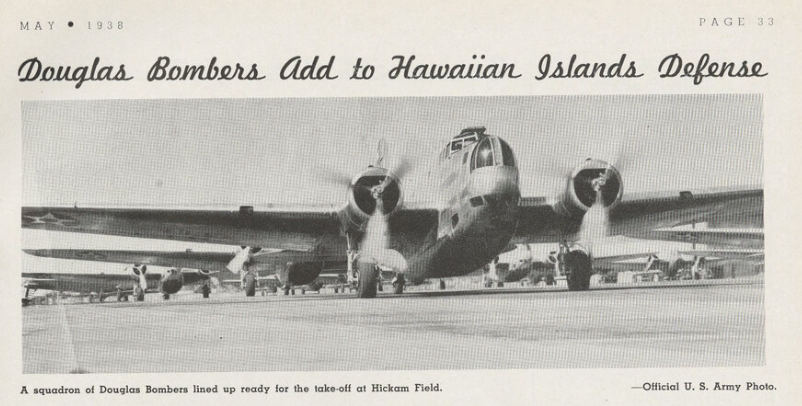 Since the DB-1 was based off an existing airframe and the aircraft was a bargain compared to the other proposals the DB-1, now B-18 Bolo, was immediately put into production. [12]
Boeing's Model 299 would later become the B-17 as we know it today.
In June of 1937 the Airview released an article about the Army buying 177 DB-1's, at the time it was the most expensive air unit contract ever written at $11,651,948. [13]
The B-18 played a small role in the war, they were first sent to Hawaii [14] and the Philippines in 1939 but were bombed to bits in the first days of the Japanese attack.
Not all B-18's were lost however and more were being built, later in 1942 B-18's were credited with the first ever successful American bombing of a German u-boat. [15]
Since the DB-1 was based off an existing airframe and the aircraft was a bargain compared to the other proposals the DB-1, now B-18 Bolo, was immediately put into production. [12]
Boeing's Model 299 would later become the B-17 as we know it today.
In June of 1937 the Airview released an article about the Army buying 177 DB-1's, at the time it was the most expensive air unit contract ever written at $11,651,948. [13]
The B-18 played a small role in the war, they were first sent to Hawaii [14] and the Philippines in 1939 but were bombed to bits in the first days of the Japanese attack.
Not all B-18's were lost however and more were being built, later in 1942 B-18's were credited with the first ever successful American bombing of a German u-boat. [15]
Even as the B-18 was being pressed into service the USAAC still felt as if there was something missing, a tail gunner for starters, and speed most importantly.
The B-23 Dragon came to fruition in 1939 [16]
as an attempt to amend these prior discrepancies; it featured upgraded engines to R-2600-3's [17], this boosted performance significantly and now the craft was 66 mph faster than the previous Bolo. 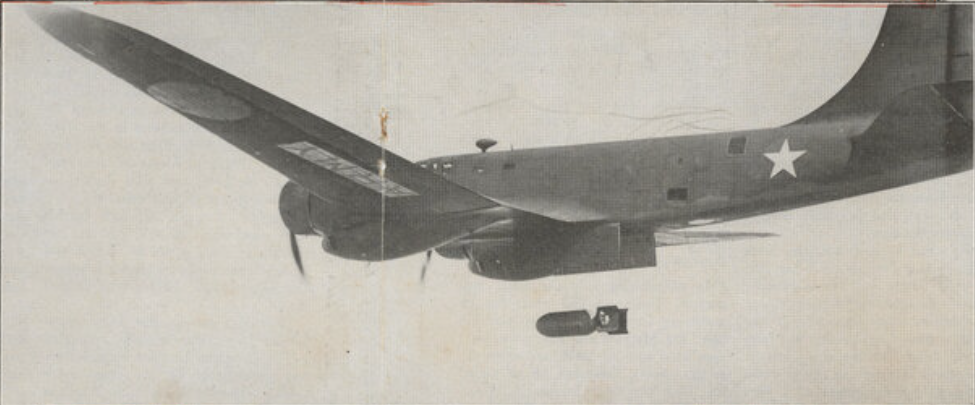 The Dragon also featured a tail gunner, which wasn't in the original design of the B-18 (despite the B-18 getting a tail gunner later). As well as slight streamlining improvements and a whole list of much smaller issues.
The USAAC bought 38 of these aircraft but they never served in their intended role, as the B-23 was not comparable to the faster and much heavier armed North American Aviation B-25's or the Martin B-26's.
The B-23's were relegated to secondary duties and practice squadrons, such as testing new munitions [18], or new engine set ups, or being converted into cargo planes.
The Dragon also featured a tail gunner, which wasn't in the original design of the B-18 (despite the B-18 getting a tail gunner later). As well as slight streamlining improvements and a whole list of much smaller issues.
The USAAC bought 38 of these aircraft but they never served in their intended role, as the B-23 was not comparable to the faster and much heavier armed North American Aviation B-25's or the Martin B-26's.
The B-23's were relegated to secondary duties and practice squadrons, such as testing new munitions [18], or new engine set ups, or being converted into cargo planes.
TBD Devastator
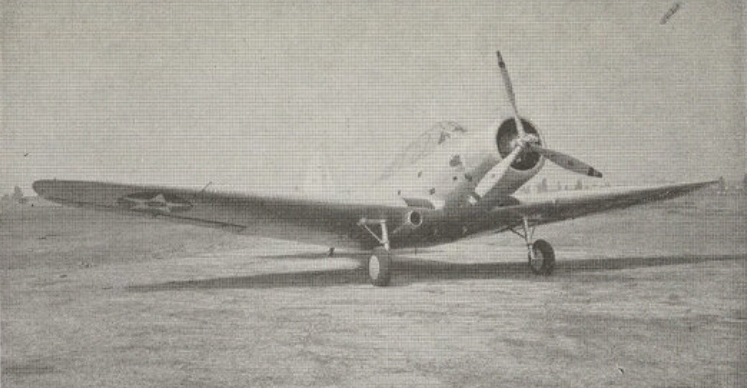
Something the Airview seldom talks about is the TBD Devastator [19], which is a shame as for its time it was considered one of the most innovative and modern aircraft in the world.
The Devastator was the first American carrier-based monoplane to be widely used, the first all-metal naval aircraft, the first with a completely enclosed cockpit, and the first with power-actuated (hydraulically) folding wings. [20]
Despite being very modern in 1935, when it was accepted into service, the TBD performed quite poorly in war as it was too slow and heavy to evade incoming fire.
The failure of the Mk. 13 torpedoes at several battles (not only Midway) combined with newer more capable machines coming to service pushed any remaining TBD's out of front line service in June, 1942.
DC-5
The March, 1939 issue of Airview magazine centers entirely on the development of the DC-5.
The DC-5 was designed to take over airline duties on smaller less developed airfields, and perform its duties as an airliner in utmost luxury; to the same degree or better as the DC-3 before it.
As American airline companies were already using the DC-3 or Boeing's competition, the DC-5 was more intended for a European audience.
Capable of a 248 mph top speed (just 10 mph under the DC-3) and a cruising speed of 221 mph (10 mph greater than the DC-3) [21] the DC-5 was going to close the gap in capability and performance between the smaller companies and their larger airline rivals.
The combination of light wing loading and a nose steering wheel makes landing and controlling the DC-5 unusually easy compared to the DC-3 and aircraft like it in extreme weather conditions.
The same article touts how large sections, like engine cowlings, seats, and some instrumentation are entirely interchangeable with the DC-3 [22], making the design process quicker and any future mechanics job easier. Unfortunately for the DC-5 not many were produced, it was a combination of poor timing and shifting needs.
For example, the year is already 1939 and most of Europe is already at war, so any new airline service would not be coming.
The DC-5 was sold to the USN as R3D's in 1940 to support the NATS, however these were rarely used in favor of the R4D (DC-3).
On June 1st, 1940 an R3D-1 crashed killing all four crew members when the aileron control cables were crossed after takeoff. [23]
Douglas only made 12 DC-5's and by the end of the war all were destroyed or dismantled.
Interestingly however the Japanese did manage to capture an R3D, not the only Douglas aircraft they had at the time.
Proto DC-4
Up until the 1938 issue of Airview Douglas was always teasing something in the background.
It was clear that they never stopped innovating on their designs and were constantly coming up with new ways to solve old issues.
As the DC-3 was in full production in the Santa Monica factory Douglas engineers needed to work on a newer, larger aircraft that would cement them as the premier airliner producer, thus snagging all airline and cargo aircraft contracts in the future. 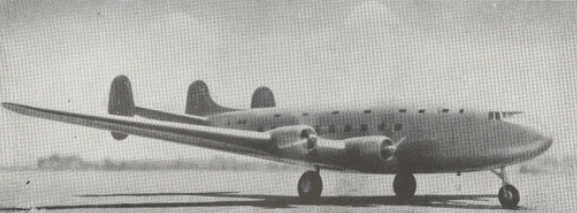 They unveiled their newest creation, the DC-4, and at the time of this magazine issue it looks nothing like how the DC-4 would eventually shape up.
For starters how could one ignore the triple tail, something like the Lockheed Constellation, however this tail setup looks far stubbier in comparison.
The DC-4 had a number of advantages, for starters it was the first large aircraft to use tricycle style gear [24]; this enabled flat and level cargo loading and an extra degree of comfort for the passengers.
Flush riveting for aerodynamics, [25] pressurized cabin for passenger comfort [26], advancements in noise dampening for special sleeping cabins. [27]
The DC-4 was a monument to the advancements in large aircraft design and many of its principals would be carried far into the future; like an APU, or auxiliary power unit, the DC-4 had two of them on the inboard engines nacelles. [28]
This allowed the main engines to just be main power engines, and the APU's to power all of the electrical and hydraulic systems on the aircraft.
Something B-24 pilots would have appreciated as if their third engine was either shot out or burnt out the entire aircraft lost the ability to maneuver or transfer fuel between tanks.
Crucially the DC-4 would have a service ceiling of 22,900 feet, be capable of emergency flying on just two engines, cruise faster carrying double the passengers of a DC-3, and be able to land in extreme weather with its incredibly low landing speed of 69 mph [29].
They unveiled their newest creation, the DC-4, and at the time of this magazine issue it looks nothing like how the DC-4 would eventually shape up.
For starters how could one ignore the triple tail, something like the Lockheed Constellation, however this tail setup looks far stubbier in comparison.
The DC-4 had a number of advantages, for starters it was the first large aircraft to use tricycle style gear [24]; this enabled flat and level cargo loading and an extra degree of comfort for the passengers.
Flush riveting for aerodynamics, [25] pressurized cabin for passenger comfort [26], advancements in noise dampening for special sleeping cabins. [27]
The DC-4 was a monument to the advancements in large aircraft design and many of its principals would be carried far into the future; like an APU, or auxiliary power unit, the DC-4 had two of them on the inboard engines nacelles. [28]
This allowed the main engines to just be main power engines, and the APU's to power all of the electrical and hydraulic systems on the aircraft.
Something B-24 pilots would have appreciated as if their third engine was either shot out or burnt out the entire aircraft lost the ability to maneuver or transfer fuel between tanks.
Crucially the DC-4 would have a service ceiling of 22,900 feet, be capable of emergency flying on just two engines, cruise faster carrying double the passengers of a DC-3, and be able to land in extreme weather with its incredibly low landing speed of 69 mph [29].
DB-7/A-20/P-70/Boston/Havoc
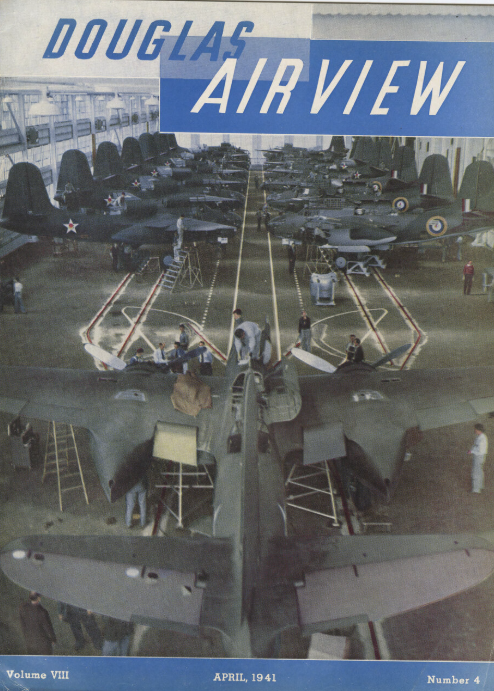 At the outbreak of World War 2 Douglas maintained its position as a leading cargo and passenger plane manufacturer, but they would never limit themselves.
In the background of the DC-3/4/5 projects lay a new type of bomber, one poised to become perhaps the most legendary in the early war.
Revered for its speed and firepower, its handling and its robustness, the DB-7 wound up in the hands of nearly every lend lease ally the United States had.
While Santa Monica was focused on cargo aircraft, El Segundo was developing a number of new war machines, the DB-7 chief among them.
In 1936 it became self-evident that all attack platforms at the time were obsolete. [30]
The USAAC had issued a specification for a new aircraft that could reach speeds of at least 250 mph with a substantial bomb load and three .30 caliber machine guns and an observer. [31]
The Model 7A was in the process of R&D during the Spanish Civil War, but as newer bombers on both sides were tested it became clear that this original 1936 specification alone would not be enough to satisfy the military and a new aircraft was needed.
The Model 7A was immediately dropped in the fall of 1937 and the Model 7B started development [32].
With the completion of the aircraft in 1938 France quickly sent an export order, seeking any form of defense against the quickly advancing Germans.
The 7B performed in front of a hastily formed French delegation and the order was signed soon after. [33]
One hundred aircraft were ordered but before they could be made the Douglas engineers agreed that what the French needed was a newer more advanced model, as the Model 7B was made in response to the Model 7A the same would have to be done here again to match the growing needs of the French.
The new and official DB-7A had one hundred more horsepower per engine compared to the previous version [34] and had a higher gross weight. [35]
In order to match demand new production techniques needed to be invented; instead of building aircraft one at a time (like all aircraft before them) the DB-7 production line began to resemble something closer to the assembly line, a la Henry Ford.
However this was the first "aircraft level" assembly line ever tried, and for war time production no less.
To bolster production of newer war assets Douglas Aviation broke ground in Long Beach California for an even larger factory on November 22nd 1940 [36].
This new factory would have the combined floor space of the Santa Monica and El Segundo plants combined; it would be a "black out" facility meaning no light would be able to escape [37], thus alerting any potential bomber or spy planes.
It would also have moving assembly line features. Here is a picture of the Santa Monica production line after it has been revamped [38].
At the outbreak of World War 2 Douglas maintained its position as a leading cargo and passenger plane manufacturer, but they would never limit themselves.
In the background of the DC-3/4/5 projects lay a new type of bomber, one poised to become perhaps the most legendary in the early war.
Revered for its speed and firepower, its handling and its robustness, the DB-7 wound up in the hands of nearly every lend lease ally the United States had.
While Santa Monica was focused on cargo aircraft, El Segundo was developing a number of new war machines, the DB-7 chief among them.
In 1936 it became self-evident that all attack platforms at the time were obsolete. [30]
The USAAC had issued a specification for a new aircraft that could reach speeds of at least 250 mph with a substantial bomb load and three .30 caliber machine guns and an observer. [31]
The Model 7A was in the process of R&D during the Spanish Civil War, but as newer bombers on both sides were tested it became clear that this original 1936 specification alone would not be enough to satisfy the military and a new aircraft was needed.
The Model 7A was immediately dropped in the fall of 1937 and the Model 7B started development [32].
With the completion of the aircraft in 1938 France quickly sent an export order, seeking any form of defense against the quickly advancing Germans.
The 7B performed in front of a hastily formed French delegation and the order was signed soon after. [33]
One hundred aircraft were ordered but before they could be made the Douglas engineers agreed that what the French needed was a newer more advanced model, as the Model 7B was made in response to the Model 7A the same would have to be done here again to match the growing needs of the French.
The new and official DB-7A had one hundred more horsepower per engine compared to the previous version [34] and had a higher gross weight. [35]
In order to match demand new production techniques needed to be invented; instead of building aircraft one at a time (like all aircraft before them) the DB-7 production line began to resemble something closer to the assembly line, a la Henry Ford.
However this was the first "aircraft level" assembly line ever tried, and for war time production no less.
To bolster production of newer war assets Douglas Aviation broke ground in Long Beach California for an even larger factory on November 22nd 1940 [36].
This new factory would have the combined floor space of the Santa Monica and El Segundo plants combined; it would be a "black out" facility meaning no light would be able to escape [37], thus alerting any potential bomber or spy planes.
It would also have moving assembly line features. Here is a picture of the Santa Monica production line after it has been revamped [38].
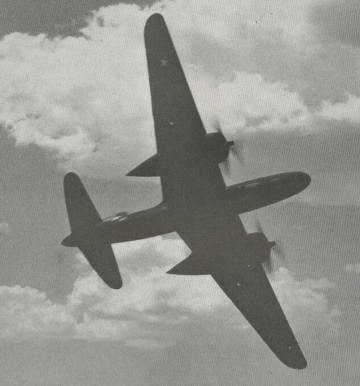
Back to the Havoc's story, the first batch of DB-7A's (75 of them) were delivered to France in July 1939.
This final evolution of the DB-7A before France fell had 1600 horsepower engines with an even greater gross weight of 17,319 pounds.
Britain took up the remainder of the DB-7A's and had also placed an earlier order for their own version of the DB-7, the DB-7B.
This new version of the aircraft replaced the 7.5mm french guns with British .303 machine guns as well as greater armor, raising total gross weight to 21,500 pounds [39].
The Boston [40] (British name for the DB-7) showed up too late for the Battle Of Britain; however it still proved itself as an extremely capable light bomber and front line attacker, with several Bostons serving as night fighters.
In October of 1941 from the exiled Dutch government office in London, 48 more DB-7C's were ordered for the Dutch East Indies. [41]
To match the needs of the domestic and allied armed forces for the first time in history aircraft manufacturers are paired up to produce much needed aircraft.
Boeing had license to build DB-7B's, and built 380 of them, but made sure there was complete interchangeability between Douglas made aircraft and Boeing made aircraft; as to ease any logistics concerns.
In July 1939 after zero commitment and four years of development the USAAC finally decided to purchase 123 DB-7's, this version would be called A-20 [42].
All A-20's (except for those made by Boeing) were manufactured in the Santa Monica plant.
After a year of the first French contract signing export aircraft orders from all around were being delivered.
A small number of American A-20A's were being held for modification to be turned into P-70's [43] to aid in night fighting while Boston 3's and DB-7A and B's completed night fighting in the European theater. [44]
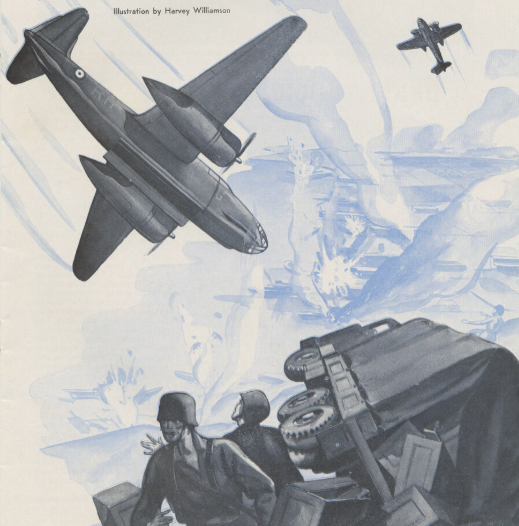
In an April 1942 issue there's a tiny blurb on a far back page regarding the russians use of the A-20, "There are now a considerable amount of Boston (DB-7) bombers in Russia. [45]"
But the audience is forced to wait a whole new year to hear anything from its actual performance.
As Commander Khoroshilov taxis his plane to park he climbs out and yells to the group gathering before him, "With planes like these we will give the Germans hell." [46]
As part of the one hundred thousand German vehicle units destroyed by the Soviets in the first two years of the war, Douglas A-20's were deemed one of the best allied machines of 1942 by Russian Generals.
Capable of destroying Fw-190's, Bf-109's, and Bf-110's seemingly with swift ease.
In order to get to the Eastern Front the planes are flown from the east coast to Africa, then to the Middle East where the American ferry pilots would brief the Russian pilots on the basics of flying the A-20 before catching a flight home to do it over again. [47]
All Havocs were being used around the world in every theater, from stories of the British using their DB-7's to "Bostonize" the enemy, or in other words to reduce them to nothing.
Or how one A-20 was shot to bits, crashed, raised, and before it could be repaired took off and flew home again.
Or the stories of Boston and Havoc pilots inventing "skip-bombing [48]" or a way to skip bombs off the surface of water for higher accuracy in level bombing.
Or even parachute [49] bombing at low levels.
There are simply too many stories to talk about over the course of the war and it would be impossible to list them all, and every single instance they showed up in the Airview.
However I will include a section dedicated to the stories of the A-20 after this article.
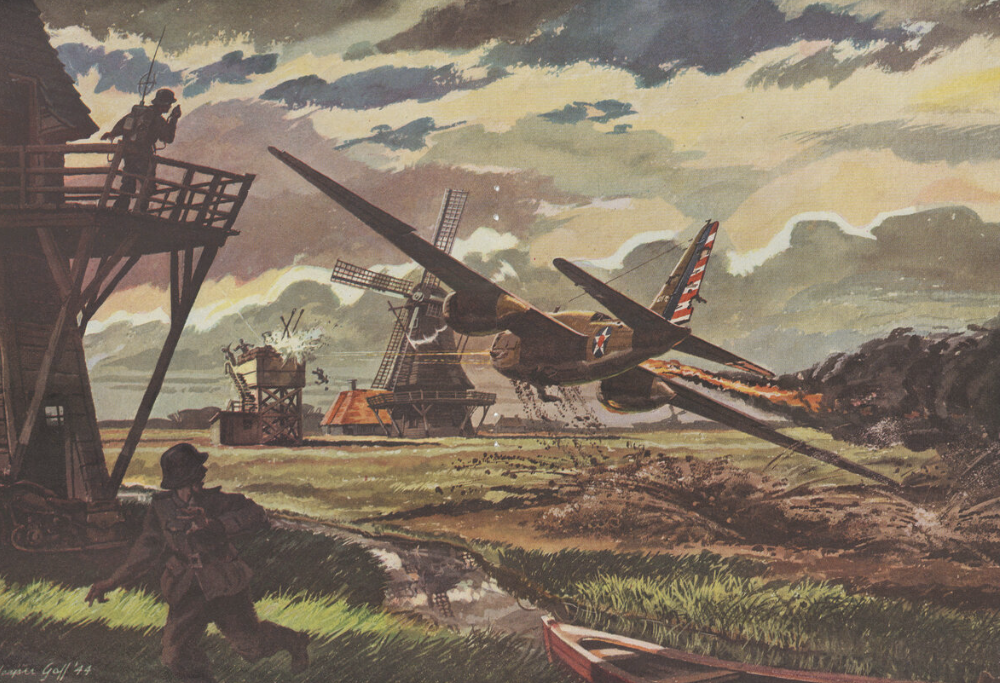
On September 20th, 1944 the 7097th and last A-20 rolled off the production line, having served the allies since 1939 the A-20/ Havoc/ P-70/ Boston/ DB-7 was instrumental in developing the western world's tactical bombing strategies.
Its great speed and heavy armament gave it deadly accuracy when confronting the enemy head on.
It steamrolled German airfields allowing the RAF room to climb and bomb the enemy at night.
It leveled fields of Rommel's tanks in Egypt and killed hundreds of thousands of German troops in every part of the European theater.
It was the first American Air Force aircraft to make an attack inside Germany.
At the end of its production life A-20K's were carrying a bombload and guns 350 mph on three fronts, [50] exploding armored trains, setting fire to factories, demolishing tanks and strategic positions.
Pathing a road of utter destruction and total war to the "Fatherland".
In the Pacific theater they were sinking thousands of tons of Japanese logistics ships and strategic positions.
The Havoc was capable of taking a serious beating and returning home anyways.
The men and women who built and served the assembly lines can be proud knowing that their hands helped bring justice to the world again, punishing those who sought global empires.
B-19 "Gaurdian Of A Hemisphere"
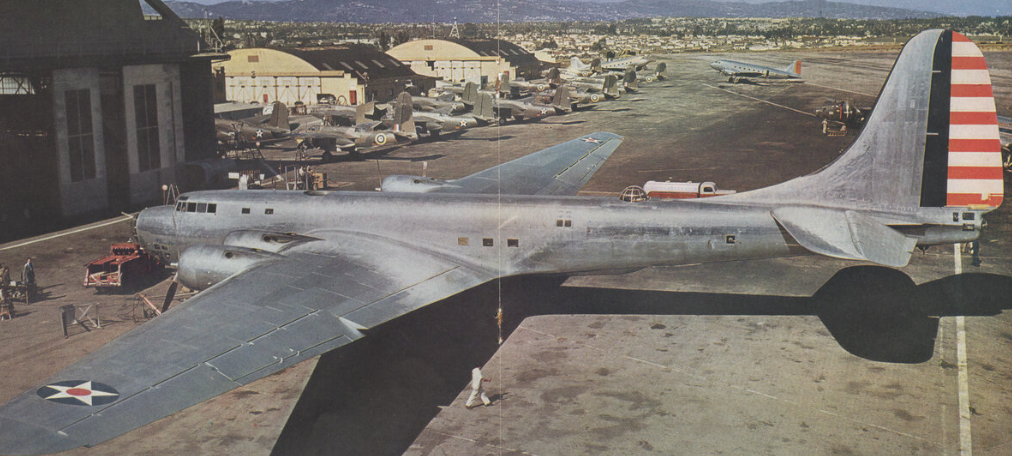
In the spring and summer issues of Airview, 1940-1941, the editors were teasing something big, something that would not only be record breaking in sheer size but also record breaking in man power to build and fly it.
In this April of 1940 issue of Airview the audience is allowed a tiny sneak peak behind the large curtains [51] guarding the behemoth, the B-19.
In it there are black and white photos of the engines, tail assembly, and hundreds of feet of layered cat walks [52].
From this first issue to June 1941 the magazine teases the audience with little snippets of its development, "VIP's inspect B-19 [53]",
"From the cradle of the airlines comes the world largest bomber [54]", and "Hemisphere Guardian Ready to Test [55]."
In the official B-19 issue of Airview they list the aircraft stats as follows: "Powered by four Wright Duplex-Cyclone engines with a combined power of 8000 horsepower… range is 7750 miles… fully loaded is 164,000 pounds… maximum bomb load of 18 tons… [56]"
In addition to the superlatives the B-19 is fundamentally built in the same style as the DC-4, that would now be in production in 1941 (that's when this issue of the B-19 came out.)
As it retains a lot of the luxury features the crew would need to stay onboard the machine, things like a galley, bathroom, and sleeping quarters, relief crew members, as well as double redundant APU's. 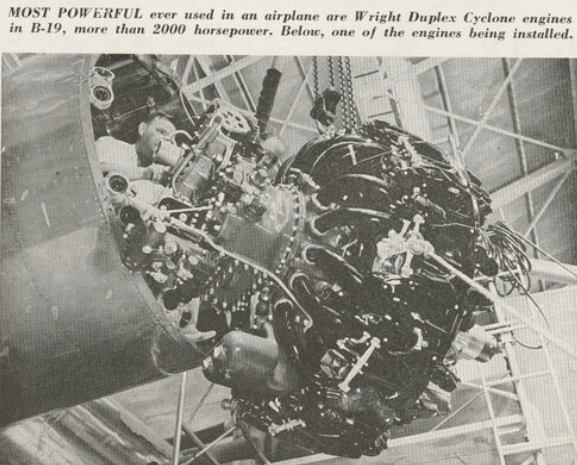 Two million man [57] hours went into the engineering and development of this plane, all of which started in 1935; which begs the question, how could this aircraft look so good on paper and in flight and yet never enter mass production?
Well, the Army Air Corp recognized that yes it was fantastic to have a bomber that could touch the other side of the world and come home in one trip the B-19 had a severe drawback, its speed.
For 1935 (when the specification was first drawn up) its stats were impressive, but the year is 1941 and with the European theater already in full swing and with intelligence coming in, it became clear that even if a B-19 could bomb German occupied France and come back in one trip it would either need some serious fighter escort to complete the mission, but no fighter had the range, or it would need some serious gunner support.
Neither of which were great options, as all it took was a skilled pilot either one very high speed pass or one very long range burst to take out the entire plane.
With a top speed of 224 mph and a cruising speed of 135 mph (at 15,700 feet) it would have been no issue for any aircraft to accomplish either attack strategy.
Not to mention how expensive it would be to get such a large aircraft in production and delivered to airbases.
Two million man [57] hours went into the engineering and development of this plane, all of which started in 1935; which begs the question, how could this aircraft look so good on paper and in flight and yet never enter mass production?
Well, the Army Air Corp recognized that yes it was fantastic to have a bomber that could touch the other side of the world and come home in one trip the B-19 had a severe drawback, its speed.
For 1935 (when the specification was first drawn up) its stats were impressive, but the year is 1941 and with the European theater already in full swing and with intelligence coming in, it became clear that even if a B-19 could bomb German occupied France and come back in one trip it would either need some serious fighter escort to complete the mission, but no fighter had the range, or it would need some serious gunner support.
Neither of which were great options, as all it took was a skilled pilot either one very high speed pass or one very long range burst to take out the entire plane.
With a top speed of 224 mph and a cruising speed of 135 mph (at 15,700 feet) it would have been no issue for any aircraft to accomplish either attack strategy.
Not to mention how expensive it would be to get such a large aircraft in production and delivered to airbases.
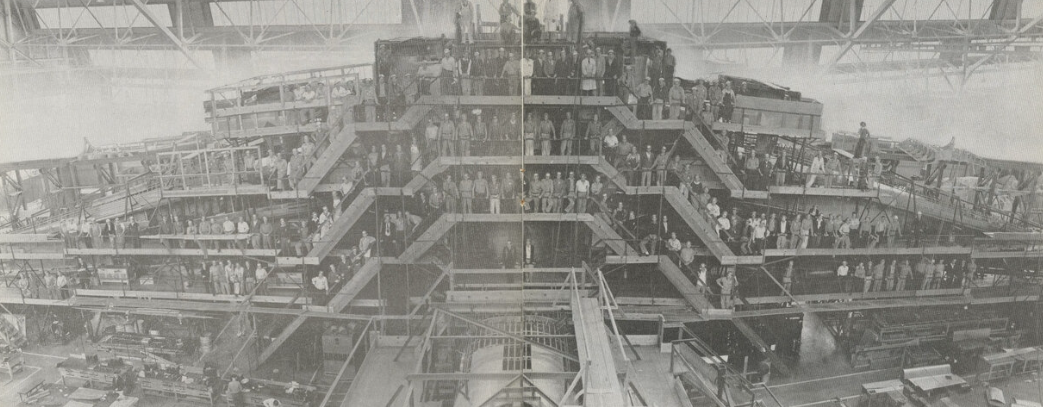
The B-19 sat in the background of the entire war, it may have never dropped bombs on any target however it still played a crucial role as being an air science lab.
The engines, R-3350's, were tested to their extremes and eventually used on other major aircraft platforms like the B-29 Superfortress, B-32 Dominator, and C-69 Constellation.
The B-19 was the first to experiment with exterior bomb shackles to expand bomb carrying capacity, in which it could carry 36,000 pounds of bombs on just the wings alone.
Different configurations of armor plate were tried, protecting fuel tanks, personnel, and engines alike.
The B-19 also functioned as a heavy multi engine trainer where several army pilots were trained.
In 1943 Fisher, a GM subsidiary, took the B-19 (as it had finished R-3350 engine trials) and re-engined the aircraft (now the XB-19A) with the Allison V-3420.
This was the same engine Fisher had been experimenting with in the P-75, and they wanted to see where else this technology could be adapted.
Additionally the XB-19A would have upgraded radio and oxygen equipment, new propellers specific to the engines; these propellers not only featured full feathering but the inboard propellers could even rotate to a reverse thrust position, allowing the aircraft to slow down even faster and made taxiing easier.
To assist in testing, the number two engine was fitted with a special control panel in which it would record air flow, pressure differentials, and temperatures taken from 140 different test points.
The new engines and the addition of a boost controller allowed the XB-19A to reach speeds in excess of 250 mph at altitudes between 25,000 and 30,000 feet.
Lastly the wing provided immense testing data to be used on future projects. [58]
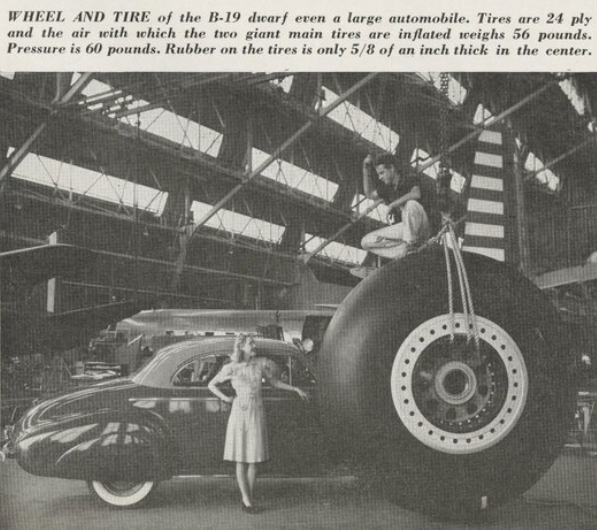
The B-19 and XB-19A faced a tragic ending, after the war had concluded the aircraft was flown to Davis-Motham air base and was scrapped as no program for saving aircraft for museums existed at the time.
The only thing saved from the aircraft was one of its monstrous main landing gear wheels [59]which now resides at the United States Air Force Museum in Dayton, Ohio.
WORLD WAR 2
The sequal is better than the first...
SBD Dauntless
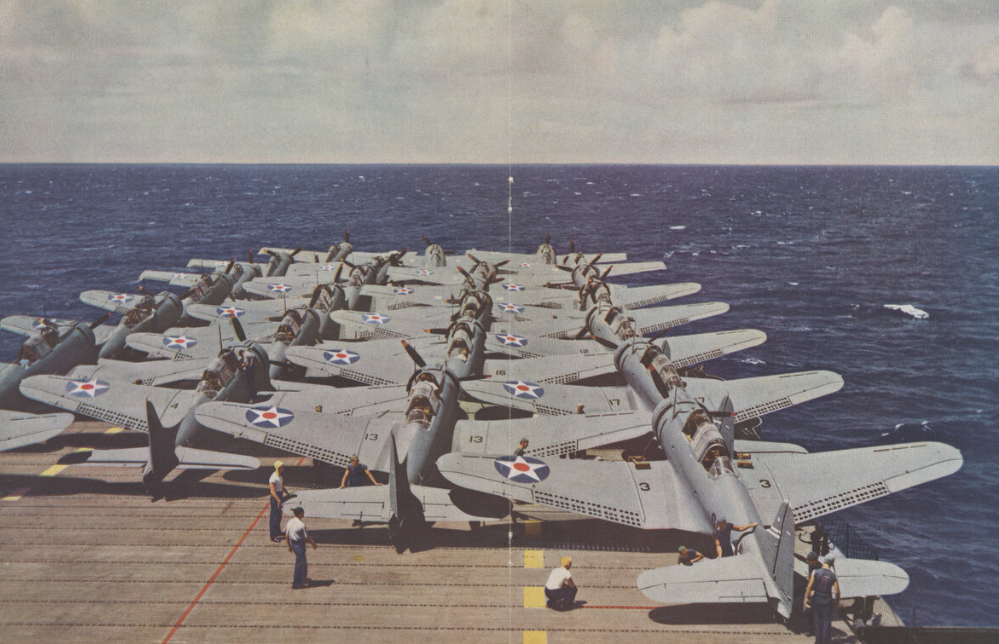
The last part of the Douglas pre-war story is quite possibly the most famous Douglas aircraft of the war, the infamous SBD Dauntless.
The Scout Bomber Douglas is a further iteration of the Bomber Douglas -1 or BD-1 of which the navy already had several of.
The SBD maintained its crew of two, pilot and gunner, but had fully retracting gear and a large airbrake to complete dive bombing duties more effectively.
The airview first mentions deliveries of the SBD to the Navy in October of 1940 where in the article describes how it is in every way conceivable superior to the Ju 87 Stuka [60].
In June of 1941 the US Marine Corps got their first batch of A-24's [61](non Navy designation for the SBD) and were subsequently stationed on Hawaii, but famously due to poor communication the Japanese attack on Pearl harbor wiped out the vast majority of aircraft on the ground including lots of SBD's.
Before the attack was over the SBD's from USS Enterprise launched and did have a chance to strike back at a lone Japanese submarine. [62] In this February 1942 issue, "Douglas Dive Bombers are Blasting the Japs", Lieutenant General George H. Brett relays the following story:
"A formation of seven American Army Douglas A-24 dive bombers escorted by fighter planes swooped down on an enemy fleet consisting of two cruisers, four or five destroyers, and four transports and seriously damaged a Jap cruiser.
Earlier four enemy fighter planes were shot out of the sky by our heavy bombers supported by two Douglas A024;s without loss to our aircraft." [63]
The Battle of the Coral Sea was perhaps the first major use of the Dauntless, the first battle where massive formations of the ship flew to the enemy.
In the July 1942 issue article "Coral Sea" the magazine details how one Dauntless downed seven different aircraft in one battle. The crew was pilot Lieut. John A. Leppla who shot down four Zeros and gunner John Liska who shot down an additional three zeros during the battle over two days.
Liska had the following to say,
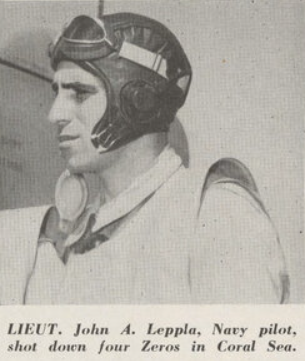
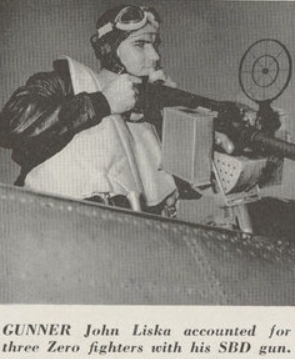 "The Jap ships were sending up a terrific amount of antiaircraft fire, and there was a squadron of Jap Zero fighters on our tail.
They followed us all the way down in the dive.
We leveled off and turned loose a large bomb at a cruiser, but by that time the Zeros were on us and I was a little too busy to see whether we hit it.
There were two Zeros on our tail and every time they came in I gave them a burst.
My gun jammed momentarily and when it was fixed I found that there was only one Zero behind us.
Leppla saw the first zero crash in the water, so I suppose I got him.
As we pulled up a Zero Crossed out path and Lieutenant Leppla let him have a burst and that was one less Jap to worry about.""
The following day the Japanese had attacked the Lexington and once again the pair got up for another serious fight.
"After getting back to the ship and totaling the scores I found that our plane received credit for seven planes in two days.
Lieutenant Leppla shot down four of those, so I must have gotten the other three." [64]
"The Jap ships were sending up a terrific amount of antiaircraft fire, and there was a squadron of Jap Zero fighters on our tail.
They followed us all the way down in the dive.
We leveled off and turned loose a large bomb at a cruiser, but by that time the Zeros were on us and I was a little too busy to see whether we hit it.
There were two Zeros on our tail and every time they came in I gave them a burst.
My gun jammed momentarily and when it was fixed I found that there was only one Zero behind us.
Leppla saw the first zero crash in the water, so I suppose I got him.
As we pulled up a Zero Crossed out path and Lieutenant Leppla let him have a burst and that was one less Jap to worry about.""
The following day the Japanese had attacked the Lexington and once again the pair got up for another serious fight.
"After getting back to the ship and totaling the scores I found that our plane received credit for seven planes in two days.
Lieutenant Leppla shot down four of those, so I must have gotten the other three." [64]
There are hundreds of such stories, not just from the Coral Sea but throughout the Dauntless' entire career.
In an October, 1942 issue the Dauntless once again showed up in droves for the Solomon Islands. [65]
Then again in Guadalcanal and again in Midway where SBD's sunk or fatally damaged all four Japanese carriers.
But the focus of my articles has never once been about the wars and battles individual aircraft participated in, for there's hundreds of shows or documentaries or youtube videos which all go into far more detail about such matters than I ever could in a single article.
Rather what's important for the Dauntless' story is that it was there, it fought hard, and got home.
It was well renowned for its robustness, capable of taking several hits and getting home or ditching alive safely.
The SBD didn't just do its job, the Brewster Buccaneer just did its job, or the TBD only did its job, rather the SBD was truly the first time Douglas staff really felt as if they had done something well.
When Douglas made the DB-7 and subsequently the A-20 the tone in the magazines never had this sort of "air of superiority.""
Yes they knew what they were making was good and yes the staff and crew recognized that the DB-7 was having a debilitating affect on everything it touched.
But no Havoc article exudes the amount of sheer American arrogance like any of these Dauntless articles.
If I didn't know any better and my only source for the SBD Dauntless were these Airview articles I would have assumed that any attempt to replace the machine would have been traitorous heresy.
Or in other words the writers and editors of the Airview are fantastic at writing propaganda.
There is no better example of this than the article dedicated to the last SBD to leave production. [66]
All good things must come to an end and in 1944 the Curtiss SB2C Helldiver was flying right along with the Dauntless, sharing the same carrier decks and performing the same missions.
Over the course of the SBD's long career in war it had gotten up to 6 different major variants, each one slightly more powerful than the last and each one has a couple of subvariants within them.
C-47 and C-54
To continue the logistical might of the USA and the unfolding story of how the DC-3 and -4 were turned into symbols of manufacturing prowess.
A prime function of Douglas and its role in the war wasn't just producing gun toting war machines, but rather they were instrumental, perhaps even the sole reason that the US had the ability to move troops and equipment wherever and whenever they wanted. 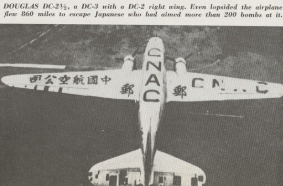 In one year the airview went from listing how incredible it was that C-33's (DC-2's) were carrying three million pounds of cargo per fiscal quarter [67] to stories of DC-2's and -3's escaping Japanese bombing raids by stitching together the good parts of the aircraft and flying them away [68], to how C-47's and C-54's (DC-4's) are shaping up the Pacific theater. [69]
As the first C-54's were taking off for first flights several more were being taxied and warmed up at the same time, the C-54 is one of the few large aircraft to go directly from drawing board to contract without a prototype. [70]
Shortly after the first passenger DC-4 was unveiled in 1938 the US armed services became extremely interested in what such a large bird could do for them.
By 1940 the USAAC had desinged a specification around the DC-4; in it were some minor changes like instrumentaion, cargo layout, bust most strikingly the tail.
Of which the C-54 returned to a conventional tail design.
It was adopted into full service as the second customer for the DC-4, now dubbed C-54 Skymaster.
The C-54 was designed from the ground up to house an entire Army Division in its cargo bay, complete with the capability to carry light tanks, jeeps, artillery, and the men for rapid field unloading.
The tricycle landing gear on the C-54 may, to onlookers at the time, be of major concern but to a logistics specialist this was perfect. Cargo, especially wheeled cargo, could be loaded quickly onto the flat and level cargo deck without fear of the piece moving around or needing chocks.
The height off of the ground also allows the C-54 to carry larger pieces with special straps or hook devices from its belly. [71]
In one year the airview went from listing how incredible it was that C-33's (DC-2's) were carrying three million pounds of cargo per fiscal quarter [67] to stories of DC-2's and -3's escaping Japanese bombing raids by stitching together the good parts of the aircraft and flying them away [68], to how C-47's and C-54's (DC-4's) are shaping up the Pacific theater. [69]
As the first C-54's were taking off for first flights several more were being taxied and warmed up at the same time, the C-54 is one of the few large aircraft to go directly from drawing board to contract without a prototype. [70]
Shortly after the first passenger DC-4 was unveiled in 1938 the US armed services became extremely interested in what such a large bird could do for them.
By 1940 the USAAC had desinged a specification around the DC-4; in it were some minor changes like instrumentaion, cargo layout, bust most strikingly the tail.
Of which the C-54 returned to a conventional tail design.
It was adopted into full service as the second customer for the DC-4, now dubbed C-54 Skymaster.
The C-54 was designed from the ground up to house an entire Army Division in its cargo bay, complete with the capability to carry light tanks, jeeps, artillery, and the men for rapid field unloading.
The tricycle landing gear on the C-54 may, to onlookers at the time, be of major concern but to a logistics specialist this was perfect. Cargo, especially wheeled cargo, could be loaded quickly onto the flat and level cargo deck without fear of the piece moving around or needing chocks.
The height off of the ground also allows the C-54 to carry larger pieces with special straps or hook devices from its belly. [71]
With New Power Comes Great (New) Factories.
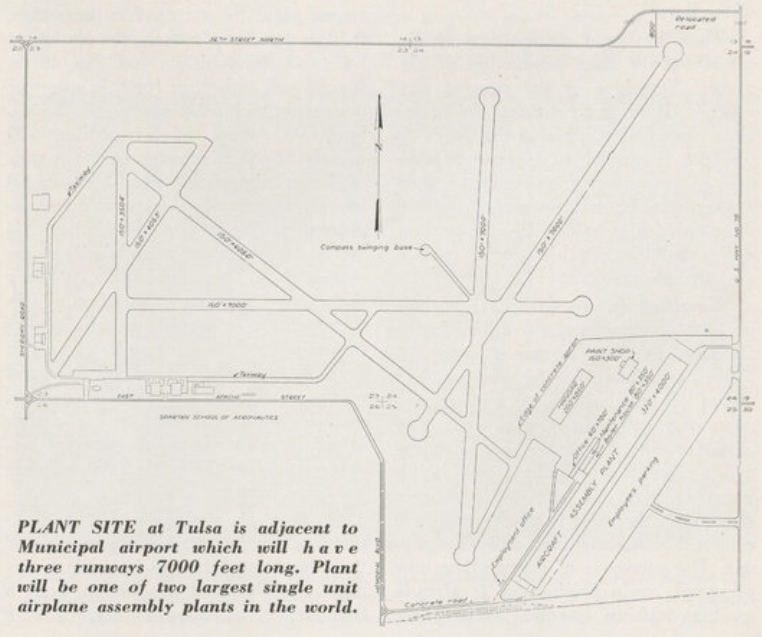
With the addition of new military contracts Douglas was able to build several new factories, each one tailored to a specific aircraft.
The already established Santa Monica plant, the original Douglas factory, would churn out C-47's and C-54's.
The Northrop expansion at El Segundo would make SBD's and more C-47's, and the Long beach plant will make A-20's.
On May 2nd, 1941 Douglas broke ground on a new factory in Tulsa Oklahoma, it'll have four runways each a mile long, two continuous hangers to build long range bombers, a large acreage for future bomber testing operations, and three major manufacturers all working together under Douglas leadership and US government ownership. [72]
This Tulsa factory was to produce as many long range bombers, like the B-24 or B-17, as possible in the shortest possible time;[72a]
as well as be a potential new proving ground for even larger and more capable future bombers.
But that's not all, even with four major production facilities in full swing the staff at Douglas are awarded another contract to build a factory dedicated to the C-54 alone.
In May of 1943 the new Chicago C-54 plant was in full swing, this factory was to be made from thirty million board feet of timber.[73]
Deep in the thralls of war, precious metals like steel and aluminum have been rationed out in favor of new battle machines.
Of all the sacrifices made to produce this factory the most important was saving thirty thousand tons of steel for other much more important products, the US Army Ordinance estimates that "this amount of steel could make 3000 medium tanks; 4200 Army trucks; 2.4 million rifles; 100 million 20mm anti aircraft shells; 3 million tank or anti-tank shells." [74]
To gather a better grasp of the manufacturing might of the companies inside his nation on April 19th, 1943, FDR visited the Tulsa plant and got an incredibly brief yet informative view of all manners inside the factory.
Running up and down the Liberator assembly lines on one side and nearly finished Dauntless' on the other FDR got a full tour of his war machines and the steps that Douglas, Boeing, and Consolidated were pushing in order to iron out all inefficiencies.
At the end of his tour FDR was given a model A-26, the first time such an aircraft was seen in the Airview. [75] 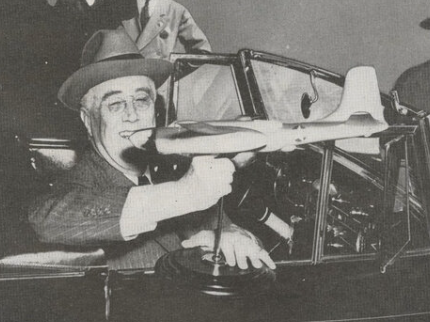 The last part of this factory family is a runt factory called "Little Dagget", from Dagget California, thirteen miles south of Barstow, an unincorporated mine town.
This little airfield only employed 250 workers total, but had every type of Douglas bird around them.
Daggett wasn't just a tiny mysterious airfield for planes to die, rather this place was home to the Experimental Flight Test Division of Douglas Aviation Company.
Before 1943 each factory had its own testing division, each one developing their own ideas to solve bugs and "squawks" in the airplane, but these factories rarely relayed their solutions to each other; so brand new aircraft from different factories were produced differently and with different parts so it was becoming a logistical nightmare for ground crews abroad.
So "Little [76] Daggett [77]" or Mines field was formed to ensure that one set of ideas and fixes are doled out to each of the factories in order to maintain congruency amongst all built airframes.
Mines field runs on a shoe string budget, headed by Donald Douglas Jr. [78], they are responsible for inventing and implementing fixes, not carefully designing new parts per se but rather the handy mechanics there will cut and shape the existing aircraft to match the needs of their superiors. [79]
Lastly in order to maintain a cutting edge on the Africa front Douglas was selected with building and maintaining a factory away from home.
In September of 1941 Douglas Staff started accruing a massive team, stretching all companies and disciplines to board a ship to be sent to colonize an undisclosed region of Africa.
There they would set up and oversee the re-assembling and maintaining of any American or otherwise allied aircraft deployed to the African theater. [80]
The last part of this factory family is a runt factory called "Little Dagget", from Dagget California, thirteen miles south of Barstow, an unincorporated mine town.
This little airfield only employed 250 workers total, but had every type of Douglas bird around them.
Daggett wasn't just a tiny mysterious airfield for planes to die, rather this place was home to the Experimental Flight Test Division of Douglas Aviation Company.
Before 1943 each factory had its own testing division, each one developing their own ideas to solve bugs and "squawks" in the airplane, but these factories rarely relayed their solutions to each other; so brand new aircraft from different factories were produced differently and with different parts so it was becoming a logistical nightmare for ground crews abroad.
So "Little [76] Daggett [77]" or Mines field was formed to ensure that one set of ideas and fixes are doled out to each of the factories in order to maintain congruency amongst all built airframes.
Mines field runs on a shoe string budget, headed by Donald Douglas Jr. [78], they are responsible for inventing and implementing fixes, not carefully designing new parts per se but rather the handy mechanics there will cut and shape the existing aircraft to match the needs of their superiors. [79]
Lastly in order to maintain a cutting edge on the Africa front Douglas was selected with building and maintaining a factory away from home.
In September of 1941 Douglas Staff started accruing a massive team, stretching all companies and disciplines to board a ship to be sent to colonize an undisclosed region of Africa.
There they would set up and oversee the re-assembling and maintaining of any American or otherwise allied aircraft deployed to the African theater. [80] 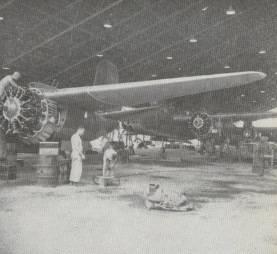 To great success the plant supported the British victory over the Italians in North and East Africa and by the end of the theater the plant fully supported a small cities worth of people and offices; complete with sports, education, and medical facilities. [81]
In the same vein as the African factory the USN also set up another modern large scale factory in the Pacific jungles to support the theater.
To great success the plant supported the British victory over the Italians in North and East Africa and by the end of the theater the plant fully supported a small cities worth of people and offices; complete with sports, education, and medical facilities. [81]
In the same vein as the African factory the USN also set up another modern large scale factory in the Pacific jungles to support the theater. 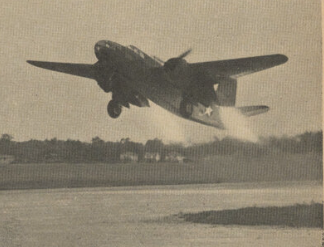 "This factory had no absentee or late worker problems as the factory was entirely ran and maintained by G.I.'s, they worked 8 hour shifts 7 days a week and in their time they would maintain and modify everything from overhauling the engines, propellers, instruments and whole airplanes, manufacture the oxygen for the Fifth Air Force and perform miracles of modification demanded by combat." [82]
After clearing Port Moresby, General Kenney (an air force commander under General MacArthur) decided that if he could not get enough airplanes to fight a war he'd keep the planes he had in the air night and day and ordered AFSC to build an air depot as close to the fon as possible.
There battered bombers, fighters and transport planes could be rebuilt and flown out again in the quickest possible time. [83]
Colonel Victor E. Bertrandias, a former Douglas Aircraft Vice President, picked an area and cleared 1600 acres with just a hundred men and some earth movers.
All men assigned to the project were all highly trained aircraft mechanics but some of them had prior trades jobs before enlisting. [84]
The men worked day and night setting everything up from the airfield for the planes, the shops for them to be rebuilt in, the offices for paperwork, and the barracks for rest; everything was done and in operation by February, 1943.
"This factory had no absentee or late worker problems as the factory was entirely ran and maintained by G.I.'s, they worked 8 hour shifts 7 days a week and in their time they would maintain and modify everything from overhauling the engines, propellers, instruments and whole airplanes, manufacture the oxygen for the Fifth Air Force and perform miracles of modification demanded by combat." [82]
After clearing Port Moresby, General Kenney (an air force commander under General MacArthur) decided that if he could not get enough airplanes to fight a war he'd keep the planes he had in the air night and day and ordered AFSC to build an air depot as close to the fon as possible.
There battered bombers, fighters and transport planes could be rebuilt and flown out again in the quickest possible time. [83]
Colonel Victor E. Bertrandias, a former Douglas Aircraft Vice President, picked an area and cleared 1600 acres with just a hundred men and some earth movers.
All men assigned to the project were all highly trained aircraft mechanics but some of them had prior trades jobs before enlisting. [84]
The men worked day and night setting everything up from the airfield for the planes, the shops for them to be rebuilt in, the offices for paperwork, and the barracks for rest; everything was done and in operation by February, 1943.
To make such factories incredible strides in far reaching logistics must be planned out to the smallest detail and executed to the highest degree.
The United States Army disguised building a new African base as "establishing an African airline."
But secretly this base was always planned to house and make arrangements for all flying types available. [85]
Primarily C-47's carry the bulk of the cargo and C-53's (troop transport C-47) would carry ferry pilots out.
Everything from the blankets and pillows personnel needed to sleep with, to vaccines and medicine to treat afflictions, to pre fabricated war materials, to large earth moving equipment. [86]
Everything came in on the back of a Skytrain.
This base was largely made in interest of the Army, serving with allies to drive back the Italians in the African theater.
But perhaps the most extensive use of Skytrains and Skymasters of the war was with NATS, or Naval Aviation Transport Service, as they set up and supplied bases for every part of the Pacific war.
"When war struck in December, 1941, the Navy immediately started setting up an air transport system that would be a part of the fleet and able to serve the demands peculiar to a naval organization to the enemy in all parts of the globe.
To properly serve the fleet NATS had to be set up so that, first, it could operate landplanes... Secondly, it had to be able to fly, at an instant's notice, into and within areas where strategic decisions of the High Command dictated.
Thirdly, NATS had to be able to function on a scheduled basis…" [87] 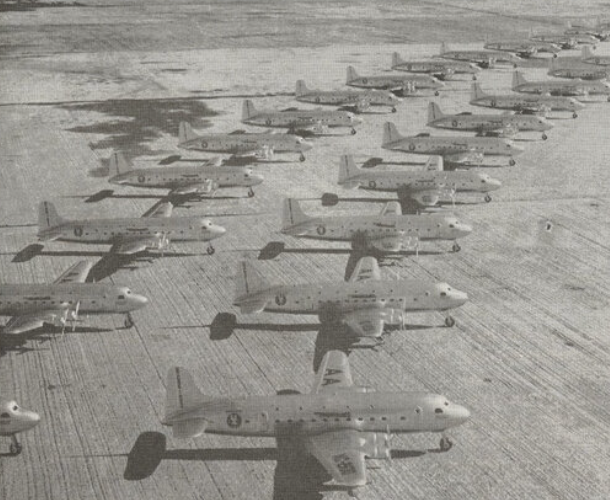 To make all of this work out officials at NATS recruited managers and super-intendents from Pan American Airlines, Pennsylvania-Central Airlines, and United Airlines.
These men would transform mere ideas into reality and by March of 1942 the original NATS squadron had exploded into eight squadrons with plans of commissioning even more by the end of the calendar year. [88]
Nearly every land bearing aircraft that NATS employed, not only in this early period but for the duration of the war were either C-47's, to complete more treacherous routes on unfinished runways, or by C-54's, to carry the heaviest cargo to where it was needed most.
In 1943 NATS elected Commander Henry Clay Hollenback to be the new Commander of a new "Skymaster only" NATS squadron, he and Lt. Comdr. William E. Townsend would be the first to fly "Old No. 9" (then a freshly new C-54) to several remote destinations.
But still skeptical, in 1943 "Horrible Henry" took a tour of the Santa Monica plant.
There he had all of his questions answered, he questioned the power curve the C-54 had and instead of quoting a number at him Benny Howard, president of Douglas at the time, and Comdr. Hollenbeck climbed into a freshly made Skymaster.
There Howard warmed the engines, taxied the aircraft to the runway.
The aircraft boomed down the strip, Howard jerked the controls up and the airplane began climbing.
At 48,000 pounds and 93 mph the aircraft got up to 1,500 feet before leveling off.
Hollenbeck said in an interview after the experience, "It was the biggest thrill I ever had in my life, watching that big ship hang on its props.
The skymaster at that gross weight, climbs like a P-38 up 1,500 feet." [89]
With new found confidence in his aircraft Comdr. Hollenbeck and his aircraft "Old No.9" became the first to make the non-stop run between Seattle and Kodiak, establishing a 1440 mile flight and in six hours and 42 minutes, he carried 10,000 pounds.
With a quick turnover shuttle now established the Navy could plan the invasion of Kiska and Attu.
After those attacks Comdr. Hollenbeck once again was the first Skymaster into Adak, establishing a 2468 mile route from Seattle to Adak.
Another first for the "Old No.9" and Comdr. Hollenbeck; the Navy needed a field hospital to support the wounded for the attack on Kiska so Comdr. Hollenbeck flew his ship down to Oakland, loaded up a field hospital load and took off again for Seattle, where he refueled and took off again for the Aleutians.
Gas stops were necessary as the load he carried weighed in at a staggering 16,000 pounds, every 700 miles he would stop; but in 16.5 hours Comdr. Hollenbeck had delivered an entire field hospital from Seattle to its final destination in the Aleutians. [90]
This one story alone proves how the R5D/C-54 could carry the largest load faster and further than any aircraft like it in the world and it's far from the only story. But to list every instance where a C-54 made a fascinating story would make even this one segment drag on and on and on; like with the other aircraft I'll include links to all of the Skymaster stories I have at the bottom.
To make all of this work out officials at NATS recruited managers and super-intendents from Pan American Airlines, Pennsylvania-Central Airlines, and United Airlines.
These men would transform mere ideas into reality and by March of 1942 the original NATS squadron had exploded into eight squadrons with plans of commissioning even more by the end of the calendar year. [88]
Nearly every land bearing aircraft that NATS employed, not only in this early period but for the duration of the war were either C-47's, to complete more treacherous routes on unfinished runways, or by C-54's, to carry the heaviest cargo to where it was needed most.
In 1943 NATS elected Commander Henry Clay Hollenback to be the new Commander of a new "Skymaster only" NATS squadron, he and Lt. Comdr. William E. Townsend would be the first to fly "Old No. 9" (then a freshly new C-54) to several remote destinations.
But still skeptical, in 1943 "Horrible Henry" took a tour of the Santa Monica plant.
There he had all of his questions answered, he questioned the power curve the C-54 had and instead of quoting a number at him Benny Howard, president of Douglas at the time, and Comdr. Hollenbeck climbed into a freshly made Skymaster.
There Howard warmed the engines, taxied the aircraft to the runway.
The aircraft boomed down the strip, Howard jerked the controls up and the airplane began climbing.
At 48,000 pounds and 93 mph the aircraft got up to 1,500 feet before leveling off.
Hollenbeck said in an interview after the experience, "It was the biggest thrill I ever had in my life, watching that big ship hang on its props.
The skymaster at that gross weight, climbs like a P-38 up 1,500 feet." [89]
With new found confidence in his aircraft Comdr. Hollenbeck and his aircraft "Old No.9" became the first to make the non-stop run between Seattle and Kodiak, establishing a 1440 mile flight and in six hours and 42 minutes, he carried 10,000 pounds.
With a quick turnover shuttle now established the Navy could plan the invasion of Kiska and Attu.
After those attacks Comdr. Hollenbeck once again was the first Skymaster into Adak, establishing a 2468 mile route from Seattle to Adak.
Another first for the "Old No.9" and Comdr. Hollenbeck; the Navy needed a field hospital to support the wounded for the attack on Kiska so Comdr. Hollenbeck flew his ship down to Oakland, loaded up a field hospital load and took off again for Seattle, where he refueled and took off again for the Aleutians.
Gas stops were necessary as the load he carried weighed in at a staggering 16,000 pounds, every 700 miles he would stop; but in 16.5 hours Comdr. Hollenbeck had delivered an entire field hospital from Seattle to its final destination in the Aleutians. [90]
This one story alone proves how the R5D/C-54 could carry the largest load faster and further than any aircraft like it in the world and it's far from the only story. But to list every instance where a C-54 made a fascinating story would make even this one segment drag on and on and on; like with the other aircraft I'll include links to all of the Skymaster stories I have at the bottom.
BTD Destroyer
Douglas is one of those companies that was always up to something.
Even as major contracts were coming in for the DB-7 and SBD the engineers and upper management knew that one day their aircraft would be too slow, or too weak to compete with the ideas and innovations from other companies.
So it may not have been talked about ever, but as a reader and a patron of the Airview I could sometimes get little glimpses of what they were working on before they fully announced anything.
For instance in the above paragraphs I mentioned that FDR was given a model A-26 to commemorate his visit, but it would be another couple years before the A-26 was an official aircraft.
From this April 1944 issue talking about the fiscal year 1943 there's a small blurb at the bottom right talking about new aircraft being tested in the background. [91]
The BTD [92] is touted as being a "radically improved" successor to the SBD, which had just seen its 5000th aircraft produced that year.
On the A-26, "The Truman committee said the Douglas A-26 is a new light bomber which is considered greatly superior, is presently beginning to come into production and in the future will be the principal light bomber produced." [93]
As if Douglas recognized that the BTD would not be enough they quickly went on to work on an entirely different aircraft altogether.
In the entire run of the airview, especially in the war years the BTD only has three mentions and none of them were about the BTD itself but rather the BTD was just there as a prop to move the point along. [94] [95]
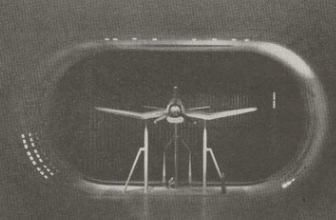
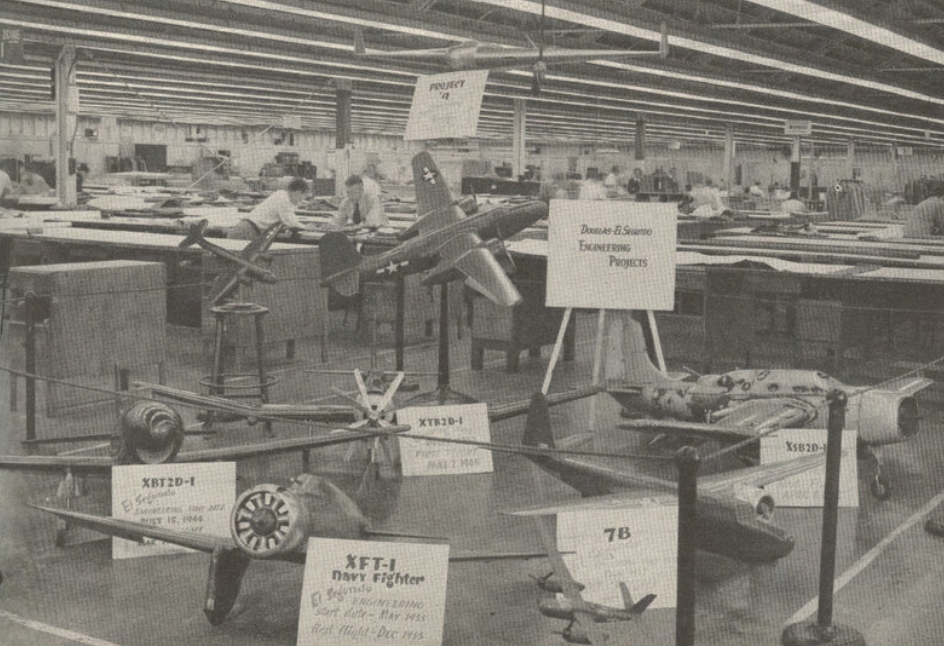
BT2D/AD-1 Skyraider
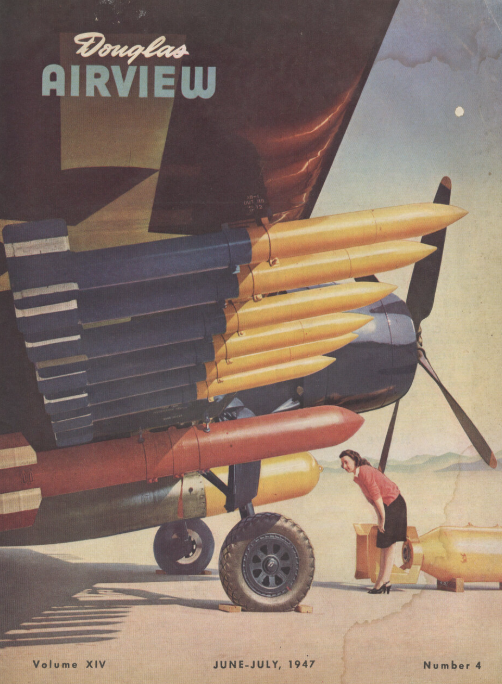
In mid-1944, after the SBD was out of production and while in service SBD's were forced to share the deck space with the cumbersome SB2C's, Douglas engineers brought a new design to the Navy.
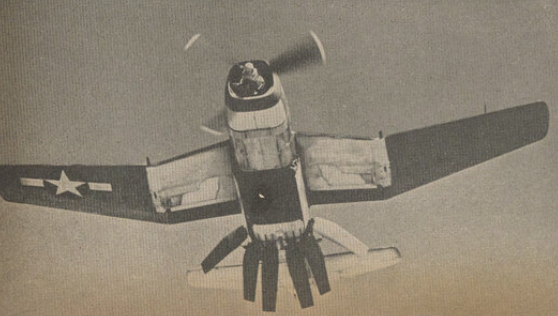
The new Douglas BT2D[97] could carry a full load of bombs, ammo, and fuel, 50 mph faster than any other war time single engine dive bomber and could safely reach 500 mph in a dive. [96]
This new plane's range doubled that of the older SBD and even as this plane was twice as large the wings folded to fit into nearly the same space as the older models.
Allowing the BT2D to fit onto all carriers.
As the war dragged on it became apparent how important it was that an aircraft be designed to fit a flexible mission, rather than be rigidly built to fulfill one duty.
With this in mind the BT2D could mount bombs, rockets, mines, or napalm all the way out to the wing tips, a torpedo on the center pylon, or an auxiliary radar pod for early warning missions. [98] 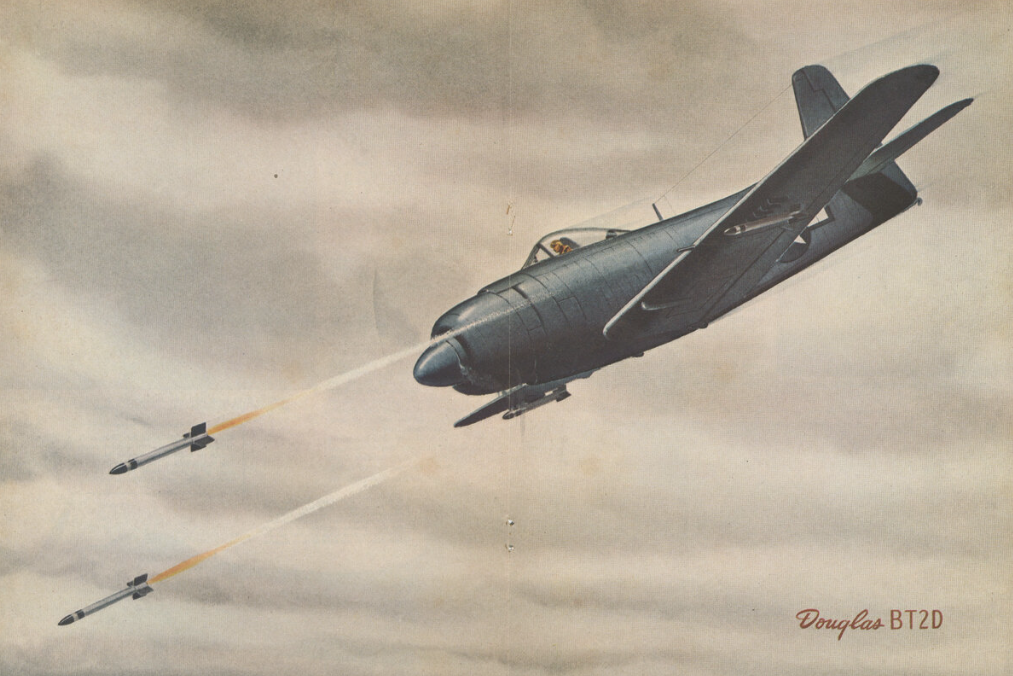 To make things even easier on deck crews the BT2D was also designed with simplicity in mind, the only fuel tank on the plane was behind the pilot, only ammo and control rods lay in the wings, the tail was built into the fuselage, and the dive breaks were body mounted rather than wing mounted.
This allowed the aircraft to slow itself down in a much more controlled fashion without putting undue stress onto the wing spars [99].
In 1946 the Navy had officially bought the BT2D, now called the AD-1 Skyraider, but this was far too late to be used in the war. [100]
The Skyraider would go on to serve in the Korean war and later again in the Vietnam war as a dedicated ground pounder and AEW platform.
Its reliability, robustness, range and reasonable price is how it got its legendary status as one of the few American piston driven aircraft to survive front line service in several wars. [101]
To make things even easier on deck crews the BT2D was also designed with simplicity in mind, the only fuel tank on the plane was behind the pilot, only ammo and control rods lay in the wings, the tail was built into the fuselage, and the dive breaks were body mounted rather than wing mounted.
This allowed the aircraft to slow itself down in a much more controlled fashion without putting undue stress onto the wing spars [99].
In 1946 the Navy had officially bought the BT2D, now called the AD-1 Skyraider, but this was far too late to be used in the war. [100]
The Skyraider would go on to serve in the Korean war and later again in the Vietnam war as a dedicated ground pounder and AEW platform.
Its reliability, robustness, range and reasonable price is how it got its legendary status as one of the few American piston driven aircraft to survive front line service in several wars. [101]
A-26 Invader
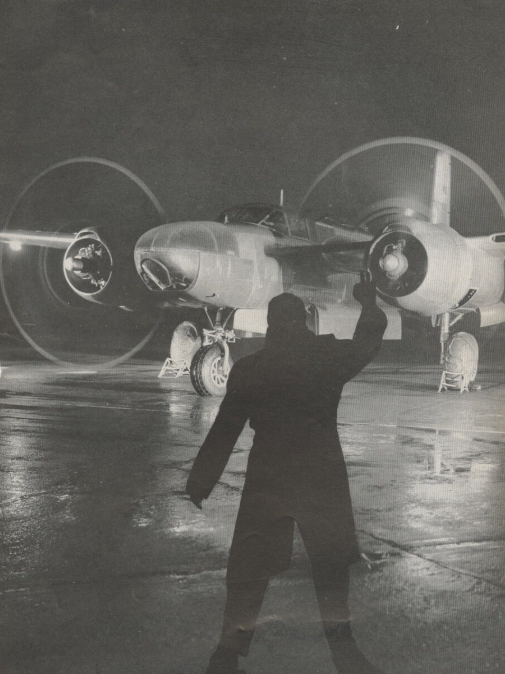 The Last B-24 exited the Tulsa plant on July 25th, 1944 in order to make room for a new line of A-26 Invaders. [102]
The A-26 Invader was frankly revolutionary for its time; while it would perform essentially the same role as its little brother, the A-20 Havoc, it would do so significantly better in every way.
It was, up until this point, the first Douglas machine to feature a laminar flow wing, meaning it could maintain control at higher speeds like its fighter brothers, and higher speeds it was achieving, in level flight the Invader could travel up to 360 mph. [103]
The experiences gained from other nations using modified A-20's, B-25's, and B-26's with modified noses to fit either more guns or higher caliber guns did not go un-noticed. [104]
In order to assist the ground crews with easy mission ready modifications the A-26 was designed with multiple types of noses that could be hot-swapped on for any necessary mission. [105]
For the mechanics who would have to work on this plane all hydraulic, electric, and HVAC lines are sent down the one side of the aircraft in a tunnel, with easily accessible access hatches for maintenance. The engine mounts were designed in such a way that there was no difference between left and right engines, and they could be taken off and entirely replaced in just an hour.
Everything [107] about the engine nacelles were designed to be within reach or otherwise easily accessible by ground crew personnel. [106]
A distinct feature on the A-26 are its two remote electrically controlled twin .50 cal turrets. Here's how they worked:
The Last B-24 exited the Tulsa plant on July 25th, 1944 in order to make room for a new line of A-26 Invaders. [102]
The A-26 Invader was frankly revolutionary for its time; while it would perform essentially the same role as its little brother, the A-20 Havoc, it would do so significantly better in every way.
It was, up until this point, the first Douglas machine to feature a laminar flow wing, meaning it could maintain control at higher speeds like its fighter brothers, and higher speeds it was achieving, in level flight the Invader could travel up to 360 mph. [103]
The experiences gained from other nations using modified A-20's, B-25's, and B-26's with modified noses to fit either more guns or higher caliber guns did not go un-noticed. [104]
In order to assist the ground crews with easy mission ready modifications the A-26 was designed with multiple types of noses that could be hot-swapped on for any necessary mission. [105]
For the mechanics who would have to work on this plane all hydraulic, electric, and HVAC lines are sent down the one side of the aircraft in a tunnel, with easily accessible access hatches for maintenance. The engine mounts were designed in such a way that there was no difference between left and right engines, and they could be taken off and entirely replaced in just an hour.
Everything [107] about the engine nacelles were designed to be within reach or otherwise easily accessible by ground crew personnel. [106]
A distinct feature on the A-26 are its two remote electrically controlled twin .50 cal turrets. Here's how they worked:
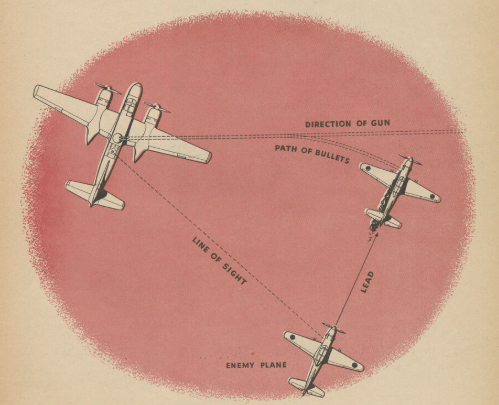 "If an enemy fighter approaches, there appears on a little window the perfect tiny silhouette of the enemy craft, and the gunner quickly focuses it, bringing each wing tip in contact with one side of a circle of tiny dots of light appearing on the screen.
In the center of the circle of dots is a single dot.
This is the home base, or the sighting point.
Sun or sky filters and a brightness control on the sighting light give the gunner a wide range of adjustment.
With the proper settings, he can sight a plane coming at him almost directly out of the sun or out of the blackness of night.
When everything else is ready he puts this dot on the oncoming plane where he wants the bullets to go and presses the trigger.
In preparation for a fight the gunner has already set his plane's altitude, speed, and outside temperature; this is typically an operation that takes less than a second to input into the computer but is all necessary.
As the properties of air change the higher a craft goes, the hotter it is, and the speed at which its travelling at.
So even with these important measurements inputted the gun still doesn't know how fast the other plane is traveling.
The gunner and computer work off of a table of possible enemy encounters.
The gunner matches the sighted silhouette with what he thinks the target aircraft is, the computer goes to its table of enemy aircraft and in conjunction with the ranging details from aligning the outside circle of dots to the wing tips of the enemy, the known enemies wing span, and the speed at which the host aircraft is travelling the computer can determine how far away the enemy is.
As the enemy gets closer the gunner keeps the silhouette's wing tips just touching the ring of dots by expanding the circle, this is how the computer calculates the enemies speed.
In less than two seconds the gunner has told the computer his planes information, the enemy planes information, and now the computer can snap the guns to the target and when the gunner presses the trigger an accurate stream of .50 cal will flow out of the turrets accurately onto the enemy. Lastly as a measure of safety the computer knows where its own engine nacelles, fuselage, and tail assembly is and will refuse to fire if the gunner swings the turret through those sections." [108]
"If an enemy fighter approaches, there appears on a little window the perfect tiny silhouette of the enemy craft, and the gunner quickly focuses it, bringing each wing tip in contact with one side of a circle of tiny dots of light appearing on the screen.
In the center of the circle of dots is a single dot.
This is the home base, or the sighting point.
Sun or sky filters and a brightness control on the sighting light give the gunner a wide range of adjustment.
With the proper settings, he can sight a plane coming at him almost directly out of the sun or out of the blackness of night.
When everything else is ready he puts this dot on the oncoming plane where he wants the bullets to go and presses the trigger.
In preparation for a fight the gunner has already set his plane's altitude, speed, and outside temperature; this is typically an operation that takes less than a second to input into the computer but is all necessary.
As the properties of air change the higher a craft goes, the hotter it is, and the speed at which its travelling at.
So even with these important measurements inputted the gun still doesn't know how fast the other plane is traveling.
The gunner and computer work off of a table of possible enemy encounters.
The gunner matches the sighted silhouette with what he thinks the target aircraft is, the computer goes to its table of enemy aircraft and in conjunction with the ranging details from aligning the outside circle of dots to the wing tips of the enemy, the known enemies wing span, and the speed at which the host aircraft is travelling the computer can determine how far away the enemy is.
As the enemy gets closer the gunner keeps the silhouette's wing tips just touching the ring of dots by expanding the circle, this is how the computer calculates the enemies speed.
In less than two seconds the gunner has told the computer his planes information, the enemy planes information, and now the computer can snap the guns to the target and when the gunner presses the trigger an accurate stream of .50 cal will flow out of the turrets accurately onto the enemy. Lastly as a measure of safety the computer knows where its own engine nacelles, fuselage, and tail assembly is and will refuse to fire if the gunner swings the turret through those sections." [108]
The Invader would serve in both major theaters to great success.
In March 1945, Airview details how the Invader has gone on 17 direct fire missions to the heat of Nazi Germany only to lose one A-26
[110] in the process.
On this mission several pilots and commanders noted, "one came back with a four inch flak hole," or "several came back only on one engine."
[109]
 Post war the A-26 would remain in service and on numerous occasions became a test bed for new projects.
Very recently after the final bombs were dropped, one A-26, piloted by Col. Joseph R. Holzappe, flew a 24,859 mile trip around the world in 96 hours and 50 minutes to prove that the A-26 could be rapidly deployed anywhere in the world.
The aircraft of course needed to make several pit stops along the way for fuel and crew sustenance, but the Invader maintained a 250 mph average for the whole flight.
Four world records were shattered for times between locations, and an additional several more were broken for USA specific records. [111]
The flight around the world record would be shattered again by another A-26 on April 16th, 1947, this one named "The Reynolds Bombshell."
This invader was stripped of eight thousand pounds of armor and other materials and again this plane was forced to make several pit stops along its 78 hour 15 minute flight.
Unfortunately the Bombshell was forced to take a four thousand mile detour as Russia refused the aircraft to pass any part of its soil in the attempt.
Even with that major set back the pilot still managed to beat the previous record held by Howard Huges by at least 12 hours. [112]
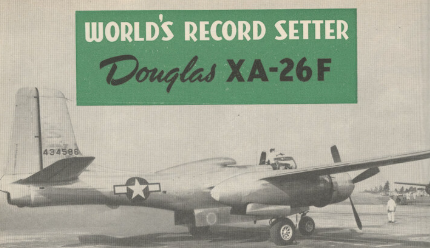
Lastly in a June 1946 issue, Airview cites how one experimental A-26, a jet assisted XA-26F, set the load-speed record at 413 mph over a distance between Dayton and St. Louis.
It was otherwise a standard A-26 but with an air intake in the empannage leading to a jet engine exhaust directly through the tail. [113]
Post war the A-26 would remain in service and on numerous occasions became a test bed for new projects.
Very recently after the final bombs were dropped, one A-26, piloted by Col. Joseph R. Holzappe, flew a 24,859 mile trip around the world in 96 hours and 50 minutes to prove that the A-26 could be rapidly deployed anywhere in the world.
The aircraft of course needed to make several pit stops along the way for fuel and crew sustenance, but the Invader maintained a 250 mph average for the whole flight.
Four world records were shattered for times between locations, and an additional several more were broken for USA specific records. [111]
The flight around the world record would be shattered again by another A-26 on April 16th, 1947, this one named "The Reynolds Bombshell."
This invader was stripped of eight thousand pounds of armor and other materials and again this plane was forced to make several pit stops along its 78 hour 15 minute flight.
Unfortunately the Bombshell was forced to take a four thousand mile detour as Russia refused the aircraft to pass any part of its soil in the attempt.
Even with that major set back the pilot still managed to beat the previous record held by Howard Huges by at least 12 hours. [112]
Lastly in a June 1946 issue, Airview cites how one experimental A-26, a jet assisted XA-26F, set the load-speed record at 413 mph over a distance between Dayton and St. Louis.
It was otherwise a standard A-26 but with an air intake in the empannage leading to a jet engine exhaust directly through the tail. [113]
Secret Projects and Post War Douglas
DC-6/C-74/DC-8/XB-42/XB-43/Cloudster 1947/"The ROC"
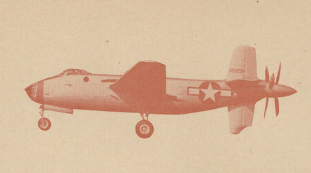 Along with the BTD and B-19 there are a number of late and post war projects that got their own special segment in the Airveiw.
Just like the B-19 one C-54 is turned into a flying laboratory, studying material deterioration in a tropical climate.
This information would go on to influence how all future military aircraft are designed, from their spars and materials to cockpit accommodations. [114]
Once again Douglas, forever innovating, came out with a new cargo and airline platform in 1946; the DC-6 and C-74 respectively. [115]
The DC-6 looks very similar to the DC-4 however the engines have been replaced with water injection R-2800's over the naturally aspirated R-2000's of the DC-4.
This allows the DC-6 to cruise up to 75 mph faster over the DC-4's top speed and with increased fuel tank capacity the DC-6 can go further as well.
The bug-eyed freak known as the C-74 Globemaster also came to fruition in 1945 as the big brother and successor to the C-54.
The Globemaster would have even larger engines, the R-4360's, and larger overall dimensions compared to the DC-6 or DC-4.
The C-74 revolutionized the loading procedure with a built-in elevator, allowing entire vehicles to be hoisted up with just the push of a button.
Outside of the cargo liner business Douglas disguised a military program as a potential new small route business plane, the DC-8.
Along with the BTD and B-19 there are a number of late and post war projects that got their own special segment in the Airveiw.
Just like the B-19 one C-54 is turned into a flying laboratory, studying material deterioration in a tropical climate.
This information would go on to influence how all future military aircraft are designed, from their spars and materials to cockpit accommodations. [114]
Once again Douglas, forever innovating, came out with a new cargo and airline platform in 1946; the DC-6 and C-74 respectively. [115]
The DC-6 looks very similar to the DC-4 however the engines have been replaced with water injection R-2800's over the naturally aspirated R-2000's of the DC-4.
This allows the DC-6 to cruise up to 75 mph faster over the DC-4's top speed and with increased fuel tank capacity the DC-6 can go further as well.
The bug-eyed freak known as the C-74 Globemaster also came to fruition in 1945 as the big brother and successor to the C-54.
The Globemaster would have even larger engines, the R-4360's, and larger overall dimensions compared to the DC-6 or DC-4.
The C-74 revolutionized the loading procedure with a built-in elevator, allowing entire vehicles to be hoisted up with just the push of a button.
Outside of the cargo liner business Douglas disguised a military program as a potential new small route business plane, the DC-8. 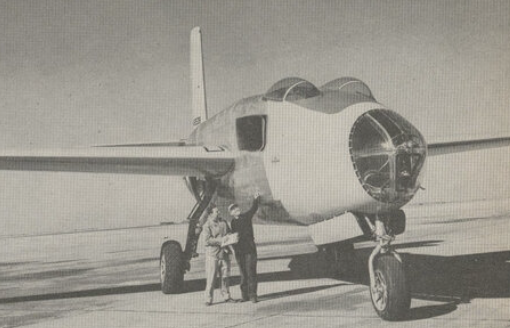 For 1945 this DC-8 would look nothing like the four engined jet DC-8 that would come around in the future; no this thing was powered by two engines, and each prop shaft moved counter rotating props in the rear of the aircraft.
Allowing the pilot and passengers to see ahead clearly and the engine nacelles (or lack thereof) to be removed entirely from the jet stream. [116]
It is however very clear that this was merely Douglas selling an unconventional idea to airliners after their XB-42 and XB-43 projects failed.
The XB-42 Mixmaster looks very similar to the DC-8 in that it is another large bug-eyed machine, though streamlined, twin pusher aircraft.
The Mixmasters only credible weapon was its four tons of bombs and 400 mph cruising speed, [117] in just the first page of this aircraft's debut its speed is mentioned 3 times before any other specifications are listed.
It also had wing mounted remote controlled flexible guns, [118] but this was later removed on later versions.
Prototype two of the Mixmaster was to replace the glazed nose with a hard nose, and provisions for either eight .50 cal. machine guns or one 75mm cannon and two .50 cal. machine guns.
This armament would have been similar to what Douglas was already producing on the A-26.
Even as the XB-42 project was floundering Douglas engineers were looking for a way to save the project and in 1945 they chose to "upgrade" the Mixmaster to jet propulsion.
The aircraft took to the modifications well despite General Electric's poor (at the time) engine quality.
With modifications complete the new Jetmaster took to the skies on May 17th, 1946, and became the first American twin engine jet bomber to fly.
The XB-43 was found to be a major improvement over the previous XB-42, despite few changes being done to the wings and fuselage. [119]
The cross style tail section was given up for a more traditional style rudder now that props strikes were no longer a concern and the removal of the older piston engines and prop shafts made just enough room for the newer J35 engines. [120]
Not too displeased without their engineering skills Douglas also tried to turn the DC-8/XB-42/XB-43 overall design into a luxury private plane; meet the Cloudster 1947. [121]
For its time the Cloudster seems like one of the best personal buisness planes on the market on stats alone, it could cruise along at 200 mph, an absolute range of 1100 miles, a useful load of 1885 pounds.
It could carry five people and 250 pounds of their luggage 950 miles while still maintaining that 200 mph speed.
For 1945 this DC-8 would look nothing like the four engined jet DC-8 that would come around in the future; no this thing was powered by two engines, and each prop shaft moved counter rotating props in the rear of the aircraft.
Allowing the pilot and passengers to see ahead clearly and the engine nacelles (or lack thereof) to be removed entirely from the jet stream. [116]
It is however very clear that this was merely Douglas selling an unconventional idea to airliners after their XB-42 and XB-43 projects failed.
The XB-42 Mixmaster looks very similar to the DC-8 in that it is another large bug-eyed machine, though streamlined, twin pusher aircraft.
The Mixmasters only credible weapon was its four tons of bombs and 400 mph cruising speed, [117] in just the first page of this aircraft's debut its speed is mentioned 3 times before any other specifications are listed.
It also had wing mounted remote controlled flexible guns, [118] but this was later removed on later versions.
Prototype two of the Mixmaster was to replace the glazed nose with a hard nose, and provisions for either eight .50 cal. machine guns or one 75mm cannon and two .50 cal. machine guns.
This armament would have been similar to what Douglas was already producing on the A-26.
Even as the XB-42 project was floundering Douglas engineers were looking for a way to save the project and in 1945 they chose to "upgrade" the Mixmaster to jet propulsion.
The aircraft took to the modifications well despite General Electric's poor (at the time) engine quality.
With modifications complete the new Jetmaster took to the skies on May 17th, 1946, and became the first American twin engine jet bomber to fly.
The XB-43 was found to be a major improvement over the previous XB-42, despite few changes being done to the wings and fuselage. [119]
The cross style tail section was given up for a more traditional style rudder now that props strikes were no longer a concern and the removal of the older piston engines and prop shafts made just enough room for the newer J35 engines. [120]
Not too displeased without their engineering skills Douglas also tried to turn the DC-8/XB-42/XB-43 overall design into a luxury private plane; meet the Cloudster 1947. [121]
For its time the Cloudster seems like one of the best personal buisness planes on the market on stats alone, it could cruise along at 200 mph, an absolute range of 1100 miles, a useful load of 1885 pounds.
It could carry five people and 250 pounds of their luggage 950 miles while still maintaining that 200 mph speed. 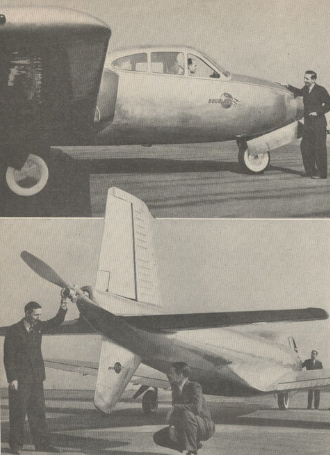 The Cloudster retained the twin engine setup, however instead of each engine driving their own prop the engines on this plane went to a gear box to drive one prop.
This allowed the aircraft to maintain a proper safety rating even in the event of an engine out.
It could normally climb at 1500 feet per minute on both engines but in the event of an engine stall the aircraft could still cruise and climb, at a reduced rate. [122]
Unfortunately the post war civilian air market did not "pop off" the way Douglas had envisioned it and in the end only the prototype was made with interest from buyers.
The Cloudster retained the twin engine setup, however instead of each engine driving their own prop the engines on this plane went to a gear box to drive one prop.
This allowed the aircraft to maintain a proper safety rating even in the event of an engine out.
It could normally climb at 1500 feet per minute on both engines but in the event of an engine stall the aircraft could still cruise and climb, at a reduced rate. [122]
Unfortunately the post war civilian air market did not "pop off" the way Douglas had envisioned it and in the end only the prototype was made with interest from buyers.
Douglas wasn't only interested in aircraft sales, they had teams of people looking into several other industries during and after the war. 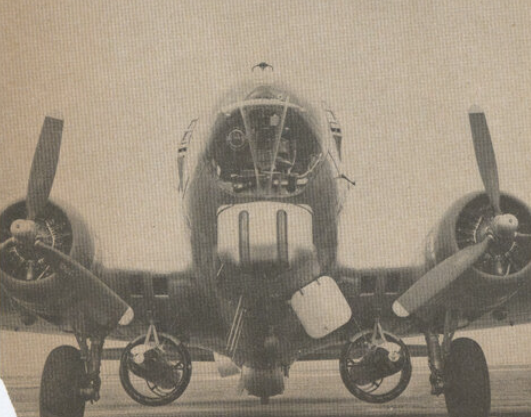 One such possible revenue scheme was through the innovation of guided munitions, and not just the human guided ones like conventional aircraft.
No, Douglas had their own air-to-ground missile called "The Roc". [123]
There were several versions of The Roc, the early ones were just a streamlined bomb with large flaperons controlled by a gyroscope and radar beam from a parent ship. [124]
However these earlier Roc's were a little too ahead for their time and the radar guidance the test team wanted wasn't working out so they switched to television guidance instead.
On the TV Roc's the bomb had now ballooned to 1000 pounds and instead of standard fins it was now controlled with a ring that held the controlling flaps on the aft portion of the bomb. [125]
The modifications team at "Little Daggett" modified a B-17 to carry two of these newer Roc's. [126]
The whole mission was shrouded in secrecy with onlookers guessing at what the strange cargo would do.
One such possible revenue scheme was through the innovation of guided munitions, and not just the human guided ones like conventional aircraft.
No, Douglas had their own air-to-ground missile called "The Roc". [123]
There were several versions of The Roc, the early ones were just a streamlined bomb with large flaperons controlled by a gyroscope and radar beam from a parent ship. [124]
However these earlier Roc's were a little too ahead for their time and the radar guidance the test team wanted wasn't working out so they switched to television guidance instead.
On the TV Roc's the bomb had now ballooned to 1000 pounds and instead of standard fins it was now controlled with a ring that held the controlling flaps on the aft portion of the bomb. [125]
The modifications team at "Little Daggett" modified a B-17 to carry two of these newer Roc's. [126]
The whole mission was shrouded in secrecy with onlookers guessing at what the strange cargo would do.
D-558 Skystreak
The last thing the Airview mentions before its run is over is the very cutting edge of technology in the field of supersonic aviation.
While the Bell X-1 was shattering records of overall speed the Douglas Skystreak set out to set some records of its own for air breathing engines.
The Skystreak was powered by an air breathing General Electric TG-180 jet turbine engine, the body was long and narrow but overall the aircraft was made with a conventional design.
However just because it looked conventional doesn't mean it inherently was, for instead of using steels and aluminums for the structure and skin the Douglas Skystreak instead made heavy use of magnesium. [127]
Due to the use of magnesium and newer design principals the Sky streak could get rid of most of the stringers and formers that would make up a normal aircraft, thus allowing more room for the engine and less material put directly into the jet stream.
The D-558 [128] was designed to be as fast and efficient as possible but also to be able to handle extreme unexpected loads during testing.
The airframe had the strength to handle an instantaneous 18g load (18 times the gravity of the earth) and a 12g sustained load. [129] 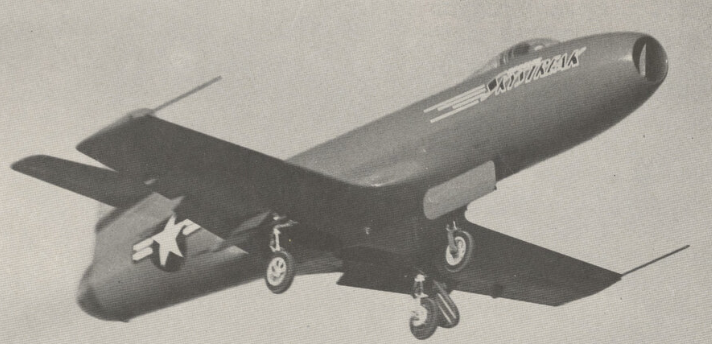 The Skystreak made its maiden flight on the 14th of April, 1947, and less than 4 months later set its first record as fastest air breathing jet in the world. [130]
"Comdr. Turner F. Cladwell Jr. of the United States Navy took the tiny key off for its first record breaking flight across the AAF's premiere Rogers Dry Lake Speed Course at Muroc, California at 8:58 AM on Wednesday, August 20.
After a flight of 90 miles in 16 minutes… [he] had made four passes over the tight west-to-east measured run fro an average of 640.7 mph, breaking the prior 623.8 mph record.
Just four days later on the 25th of August at 11:29 am Marine pilot Major Marion E. Carl climbed in and zoomed over the flash run to set a new average of 650.7 mph to break the previous test run by 10 mph." [131]
The Douglas Skystreak could, after further testing, reach speeds up to mach 0.99 in level flight, but only true mach 1 and beyond in shallow dives.
The Skystreak was quickly overshadowed by the Bell X-1 later in October of that year after it had truly gone mach 1 in level flight, however the lessons learned from the Skystreak can never be forgotten as it paved the way to the supersonic era.
The Skystreak made its maiden flight on the 14th of April, 1947, and less than 4 months later set its first record as fastest air breathing jet in the world. [130]
"Comdr. Turner F. Cladwell Jr. of the United States Navy took the tiny key off for its first record breaking flight across the AAF's premiere Rogers Dry Lake Speed Course at Muroc, California at 8:58 AM on Wednesday, August 20.
After a flight of 90 miles in 16 minutes… [he] had made four passes over the tight west-to-east measured run fro an average of 640.7 mph, breaking the prior 623.8 mph record.
Just four days later on the 25th of August at 11:29 am Marine pilot Major Marion E. Carl climbed in and zoomed over the flash run to set a new average of 650.7 mph to break the previous test run by 10 mph." [131]
The Douglas Skystreak could, after further testing, reach speeds up to mach 0.99 in level flight, but only true mach 1 and beyond in shallow dives.
The Skystreak was quickly overshadowed by the Bell X-1 later in October of that year after it had truly gone mach 1 in level flight, however the lessons learned from the Skystreak can never be forgotten as it paved the way to the supersonic era.
Fiscal Findings
The last thing to cover is the company's overall fiscal reports, which were released in the early months of every year.
Starting with fiscal year 1940 published in February 1941: As was common with American companies before their direct involvement in the war effort they made the bulk of their sales with export orders to other nations.
Douglas Aircraft Company made $60,970,744.46 in total sales revenue and 58.6% of that (or $35,759,555.37) were export orders. [132]
As discussed earlier the company would have been selling huge numbers of DB-7 and C-47 type aircraft to France, Britain, and the Dutch East Indies.
The U.S Army bought $5,866,739.89 (or %) and the Navy bought $3.294,585.30 (or %). Commercial aircraft sales, while slowing due to world tensions, still proved profitable with $13,175,539.07 (or %) of domestic revenue and $2,874,354.83 (or %).
After purchasing the man power, materials, buildings bills, and maintenance the company only netted $10,831,971.04, after $3,000,000 of that was paid out to shareholders the remainder was used to purchase new equipment and a further backlog of materials. [133]
Comparing 1939 to 1940 the company saw numbers double in every category: sales went from $27 million to $60 million, average employment went from 7,588 to 16,725, amount spent on pay roll traveled with it.
More people, more material, more taxes, in 1939 the company only paid 1.7 million in taxes but that more than doubled in 1940 to 27.7 million.
The cost of equipment and tooling saw the biggest increase as production moves into full swing with a 2.6 times difference between 1939's numbers and 1940. [134]
The combination of both foreign and domestic orders comes out to a whopping $348,866,237 of backlog as the company can only work so fast even as its planning its new Long Beach facility.
There are other articles for the other years but next is a look at fiscal year 1944.
"During the first five years of World War II, Douglas Aircraft Company has built a total of 24,515 military planes for the AAF and the air forces of our Allies." [135]
In the boards overlooking aircraft production efficiency Douglas stood first in heavy bomber (thanks to the Tulsa plant), two-engine bomber and two-engine transport (thanks to the combined efforts of each west coast factory) categories.
Before the SBD production was discontinued, El Segundo was also ranked highest among its peers in the single-engine bomber category.
The bulk of Douglas's total production numbers go as follows: 7,000 A-20 type attackers, nearly 6,000 SBD dive bombers, 3,000 fortresses and liberators, about 7,750 C-47 type cargo planes and an additional 750 various other platforms. [136]
Even through countless revisions and modifications the total price of a 1944 A-20 has dropped 23% compared to that of a 1940's version.
From 1940 to 1944 the "pound of accepted airplane" per employed rose drastically; before America's direct involvement the average employee produced 490 pounds of "accepted airplane" in a year.
This measure includes employees who do not directly touch aircraft components like office workers as their labor is still utilized within the company.
The way Douglas calculates this number is simple: total pounds of aircraft produced divided by total employees.
As the years drag on the numbers of employees rise but so does overall efficiency, things like improvements in assembly lines, new inventions to make the work faster, and better training raises the amount of "accepted airplane" the average worker can produce.
So by 1944 the average worker is producing about 2725 pounds of "accepted airplane." [137]
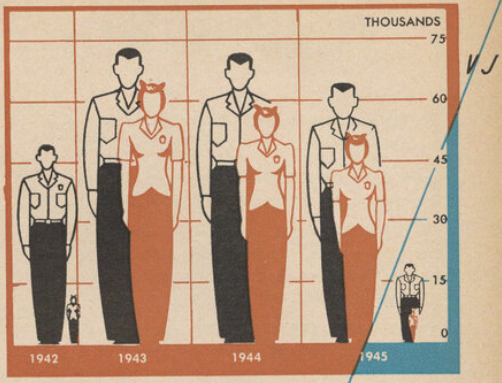 Things took a drastic change in the 1945 report, Douglas higher ups recognized that the day would come when the war would end and contracts would be terminated but nothing could have prepared them for the immense cost cutting campaign they would be embarking on.
After the collapse of Germany in March and the fall of the Japanese Empire in August war time contracts came to a screeching halt, 1.2 Billion dollars of contracts in fact.
Even with the war over because of the new DC-6 that just came to market and the stock of newly built cargo planes Douglas was able to sell to a number of fledgling airlines across the world.
Things took a drastic change in the 1945 report, Douglas higher ups recognized that the day would come when the war would end and contracts would be terminated but nothing could have prepared them for the immense cost cutting campaign they would be embarking on.
After the collapse of Germany in March and the fall of the Japanese Empire in August war time contracts came to a screeching halt, 1.2 Billion dollars of contracts in fact.
Even with the war over because of the new DC-6 that just came to market and the stock of newly built cargo planes Douglas was able to sell to a number of fledgling airlines across the world. 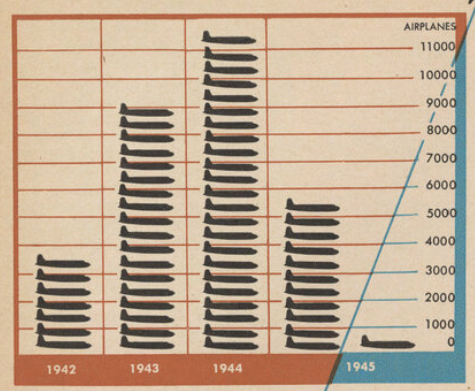 New customers from Australia, Belgium, Brazil, Denmark, Eire, France, Norway, South Africa, Spain, Sweden, Switzerland, The Netherlands, and the Netherlands East Indies all needed a new air line to ship people and supplies to war torn parts of their countries as well as the ability to fly people wherever they needed to go.
At home an additional twelve (and more not listed) [138] airlines wanted the new DC-6 to fly customers at 300 mph on their already established air routes.
But even with new demand for new planes there simply was not enough work to go around and Douglas was forced to downsize drastically.
Before VJ day the company had about 117,000 employees, but in the last fiscal quarter of 1945 this number was reduced to 27,000 total employees. [139]
Personnel wasn't the only division that saw a major cut back, of course with less people to build the planes less planes are going to get built.
1944 was the busiest year totalling in excess of 11,000 planes, but for 1945 prior to VJ day Douglas totalled about 5500 planes and after VJ day the company only managed to produce less than a thousand planes. [140]
A knock on effect of war time contract cancellations are a shrinking backlog of orders, in January Douglas reported $1.6 billion dollars in backlogs but after VJ day that number deflated to a measly $220 million. [141]
To the side is the "Douglas Dollar" or a representation of how Douglas spent each dollar it earned. [142]
New customers from Australia, Belgium, Brazil, Denmark, Eire, France, Norway, South Africa, Spain, Sweden, Switzerland, The Netherlands, and the Netherlands East Indies all needed a new air line to ship people and supplies to war torn parts of their countries as well as the ability to fly people wherever they needed to go.
At home an additional twelve (and more not listed) [138] airlines wanted the new DC-6 to fly customers at 300 mph on their already established air routes.
But even with new demand for new planes there simply was not enough work to go around and Douglas was forced to downsize drastically.
Before VJ day the company had about 117,000 employees, but in the last fiscal quarter of 1945 this number was reduced to 27,000 total employees. [139]
Personnel wasn't the only division that saw a major cut back, of course with less people to build the planes less planes are going to get built.
1944 was the busiest year totalling in excess of 11,000 planes, but for 1945 prior to VJ day Douglas totalled about 5500 planes and after VJ day the company only managed to produce less than a thousand planes. [140]
A knock on effect of war time contract cancellations are a shrinking backlog of orders, in January Douglas reported $1.6 billion dollars in backlogs but after VJ day that number deflated to a measly $220 million. [141]
To the side is the "Douglas Dollar" or a representation of how Douglas spent each dollar it earned. [142]
Goodbye Airview
With the twilight of the war coming to an end, in 1946 Douglas was still around and producing world changing machines.
With C-74 and DC-6 deliveries there was enough money to keep the company afloat, but sales numbers returned to a pre war era.
Now the only customers the company could reliably obtain were airlines and the occasional military contract.
Total numbers across the board dipped slightly in this year, but the bulk of the damage was done.
Backlog remained at $209 million, just $13 million [143] less than the year before.
The number of employees dropped again to: 26,000 people, 22% of them women, 7400 total war veterans. [144]
For this year the company only built 127 new aircraft compared to the 5,354 of the previous year. [145]
It's difficult to tell what the company was doing exactly to cut costs, of course they closed the mid-west factories (or sold them to the government.)
Of course they cut employees, halted raises, and reduced working hours. Of course they cut benefit programs and employee clubs, and of course they would cut the Airview.
The Airview released its final issue, August-September 1947, with a heart warming goodbye covering the history of not only the magazine's role in the company but a short history of the company itself:
"With this issue, Douglas Airview suspends publication.
Since 1933, when Douglas Airview was born, it has recorded a long pageant of change, both in the Douglas aircraft company and in the aircraft industry itself.
In that year, Douglas began the long climb to pre-eminence in the transport field, with the DC-1, DC-2, and DC-3; planes that were destined to change the air travel and cargo concepts of the world and usher in the Air Age.
The decade following 1933 also saw the development at Douglas of the SBD Dauntless dive bomber, the A-20 Havoc, the DC-4 (C-54 Skymaster in military terms).
These planes were to play a heroic part in the world's struggle to come.
The then-largest plane on earth, the mighty B-19, presaged the huge bombers to come and formed a "flying laboratory" in their creation.
With the onset of the great struggle with Germany, Japan and Italy.
Douglas grew as the demands upon its skill and industry grew.
Six great plants produced day and night, pouring out C-47's, C-54's, SBD's, A-20's, B-17's, B-24's, and A-26's finally outstripping the combined production of both Germany and Japan.
Airview was the medium that made this gigantic effort known and understood, not only to the men and women of Douglas who achieved it, but to national publications, officials, leaders or opinion-and the world at large.
Wartime circulation reached a peak of 170,000 readers monthly.
After V-E and V-J Days, airview told the story of Douglas' return to peacetime operations, recording, among other elements, the growth and introduction of the DC-6, its triumphs as the first great post-war transport.
Douglas' research has had its story in Airview also, culminating herein with the double worlds speed records for the D-558 Skystreak.
The decision to cease publication was reached at the dictate of economic necessity.
Any corporation faced with the job of reducing operations to be more in line with earnings, must choose those functions most necessary to survival.
Although Airview will no longer be here, the spirit of Douglas men and women, of which it was but the reflection, still remains.
This spirit will carry on, confirming the great past, assuring the great future of Douglas." [146]